By Gabriel Ameh
The Chartered Institute of Procurement and Supply (CIPS) and the Bureau of Public Procurement (BPP) have called for stronger ethical standards, institutional collaboration and professional capacity development to strengthen Nigeria’s procurement system and protect public investments.
The call was made on Thursday during “The Great Conversation Executive Roundtable” organised by CIPS at the Abuja Continental Hotel, Abuja.
The event brought together procurement professionals, policymakers, industry leaders and representatives of professional bodies to discuss the future of procurement and supply management in Nigeria and across the globe.
Speaking at the event, the Country Director of CIPS Nigeria, Chukwudi Uche, said procurement and supply management had evolved beyond administrative functions to become a strategic tool for national development, accountability and institutional performance.

According to him, procurement now plays a major role in value creation, responsible public spending, supply chain resilience, sustainability and risk management.
“Procurement and supply professionals are increasingly expected to operate not merely as administrators, but as strategic advisors and transformational leaders,” Uche said.
He, however, noted that procurement leadership remained underrepresented in executive decision-making spaces despite the profession’s growing importance.
According to him, gaps still exist in areas such as strategic sourcing, digital procurement transformation, analytics and stakeholder engagement.
“In some institutions, procurement continues to be viewed as a transactional or support function rather than the strategic driver that it should be,” he added.
Uche explained that the roundtable was aimed at encouraging collaboration among stakeholders and creating practical solutions to improve procurement and supply management in Nigeria.
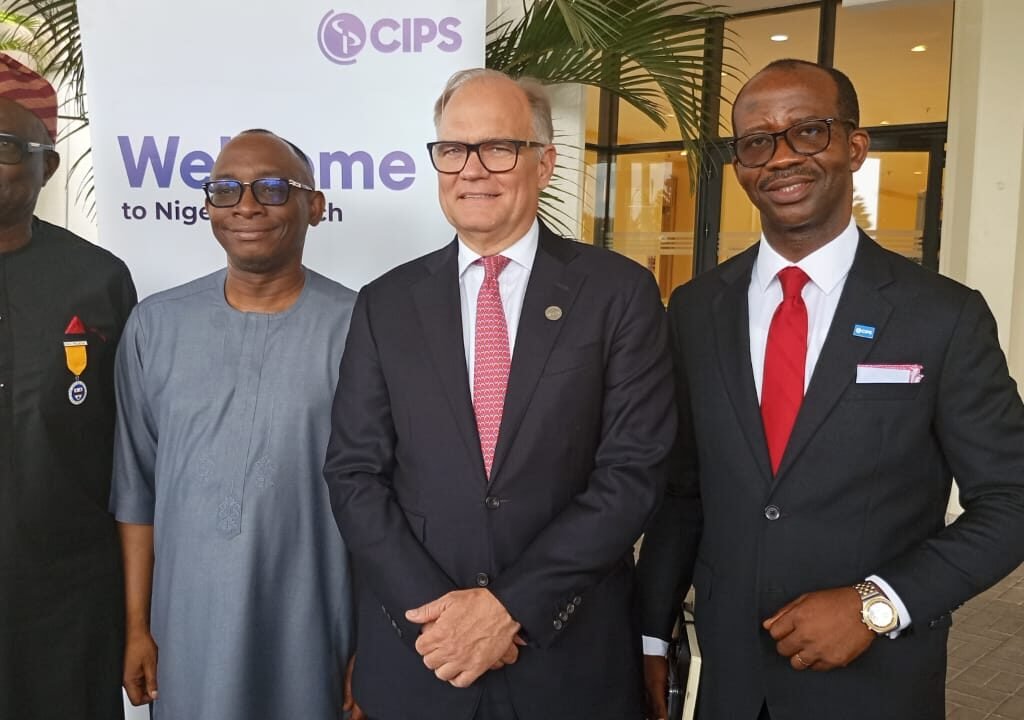
He also described the visit of the Global Chief Executive Officer of CIPS, Ben Farrell, as a sign of Nigeria’s growing relevance in the global procurement and supply chain ecosystem.
In his remarks, the Director-General of the Bureau of Public Procurement, Adebowale Adedokun, stressed the need for ethical procurement practices as Nigeria continues to invest heavily in infrastructure and social development projects.
“We need professional bodies that have embedded ethical standards in their programmes.
Nigeria is building roads, hospitals and buying medical equipment, and the people handling these processes must be professionals committed to ethical practices,” Adedokun said.
He said the partnership between BPP and CIPS would help Nigeria access global best practices, technical expertise and ethical oversight in procurement processes.
According to him, the Federal Government is also working to bridge the gap between the public and private sectors in procurement management to ensure accountability and transparency.
Adedokun further disclosed plans to introduce procurement education, mentorship and ethical training at secondary school and university levels.
“We are collaborating with CIPS to develop mentorship programmes and career counselling for young people. Nigeria has a youthful population and we must equip them with the right professional skills,” he said.
He added that the initiative would help produce a new generation of ethical procurement professionals capable of reducing waste and promoting transparency in government contracts.

The event also featured the presentation of the CIPS Ethical Procurement and Supply Award to MEBS Global for its commitment to transparency, accountability and professional excellence in supply chain operations.
In addition, Dr. Bola Afolabi received a Lifetime Membership Award in recognition of his contributions to procurement reform, supply chain management and professional development.
Organisers described Afolabi as a trailblazer whose career has significantly shaped procurement practice in Nigeria, Africa and globally.
The organisers also highlighted the leadership of Farrell, who became Global CEO of CIPS in October 2024, noting his role in advancing conversations around artificial intelligence, ethical leadership, ESG principles and sustainable procurement worldwide.