
By Caroline Ameh
A recent court ruling has triggered widespread reflection across political circles, after an individual once perceived as firmly in control of a political “stronghold” was stripped of claims he had long projected as his own.
The figure, often described in commentary spaces as a “self-crowned landlord,” had consistently conveyed confidence and authority over what he portrayed as his domain. However, the court’s decision has now reshaped that narrative, determining that the claims to ownership lacked legal backing.
The ruling has not only altered perceptions but also repositioned the individual within the political landscape—from a place of dominance to one of uncertainty, as he is now seen seeking new footing following the loss.
Political observers say the development reflects a broader truth about power dynamics: authority, no matter how strongly asserted, remains subject to institutional scrutiny and legal validation.
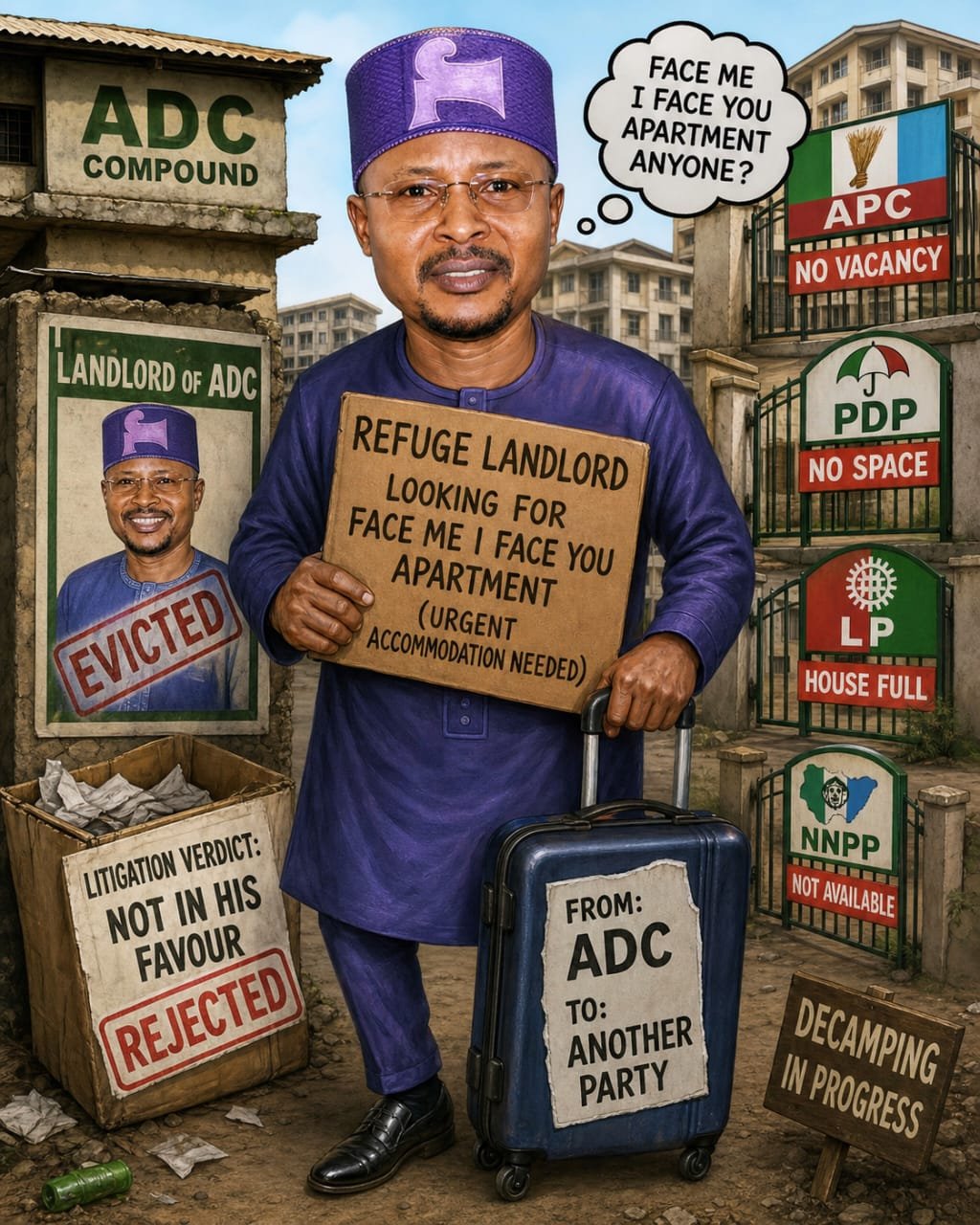
A widely shared reflective commentary capturing the moment reads:
“He once called himself a landlord, owner of a house he didn’t really build. He spoke with confidence, as if the keys were his forever.
Then the court looked at everything and said, simply: this house is not yours.
Now the former self-crowned landlord is moving around with his bag, knocking on doors. ‘Any space? Even face-me-I-face-you will do,’ he says.
That is politics. Today you act like the owner. Tomorrow you are searching for where to stay. Power is a borrowed house one day, the real owner will ask you to leave.”
Analysts note that the episode underscores the fluid nature of political influence, where control can shift rapidly and previously dominant figures may find themselves navigating new realities.
The ruling serves as a reminder that political authority is often temporary shaped not just by perception, but ultimately defined by legal and institutional frameworks