
By Gabriel Ameh
Abuja | October 2025 — Nigeria’s coordinated security and regulatory agencies have recorded remarkable operational gains in September 2025, demonstrating the Tinubu administration’s Renewed Hope Agenda in action through intelligence-led operations, inter-agency collaboration, and citizen engagement.
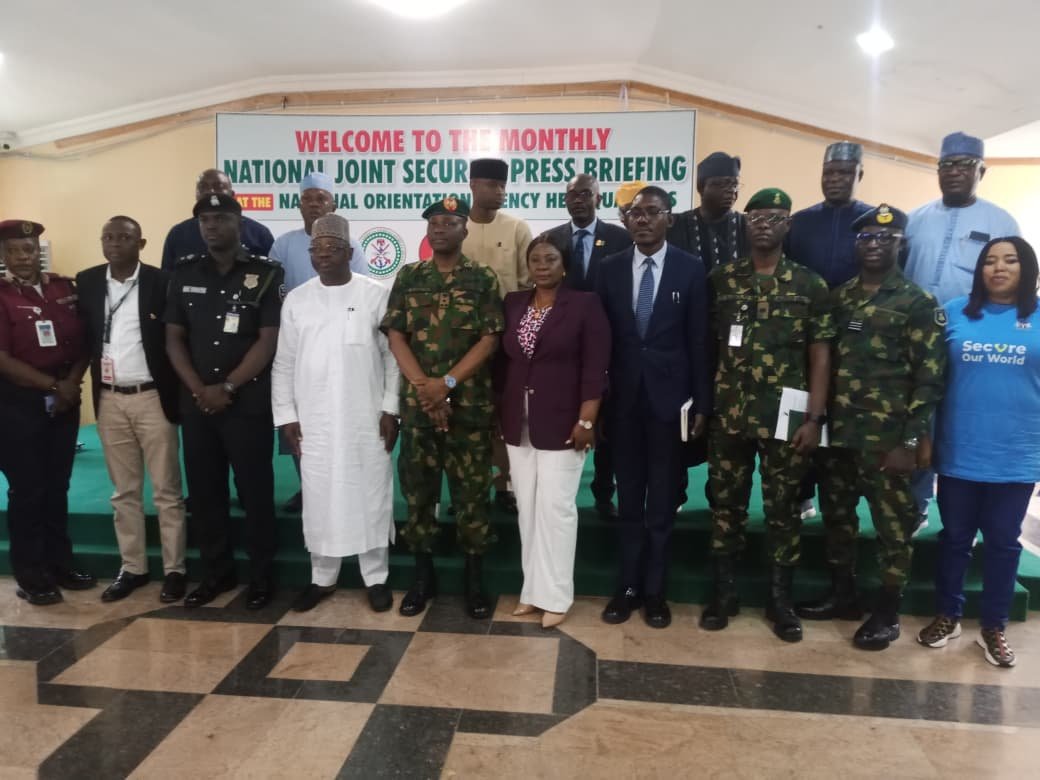
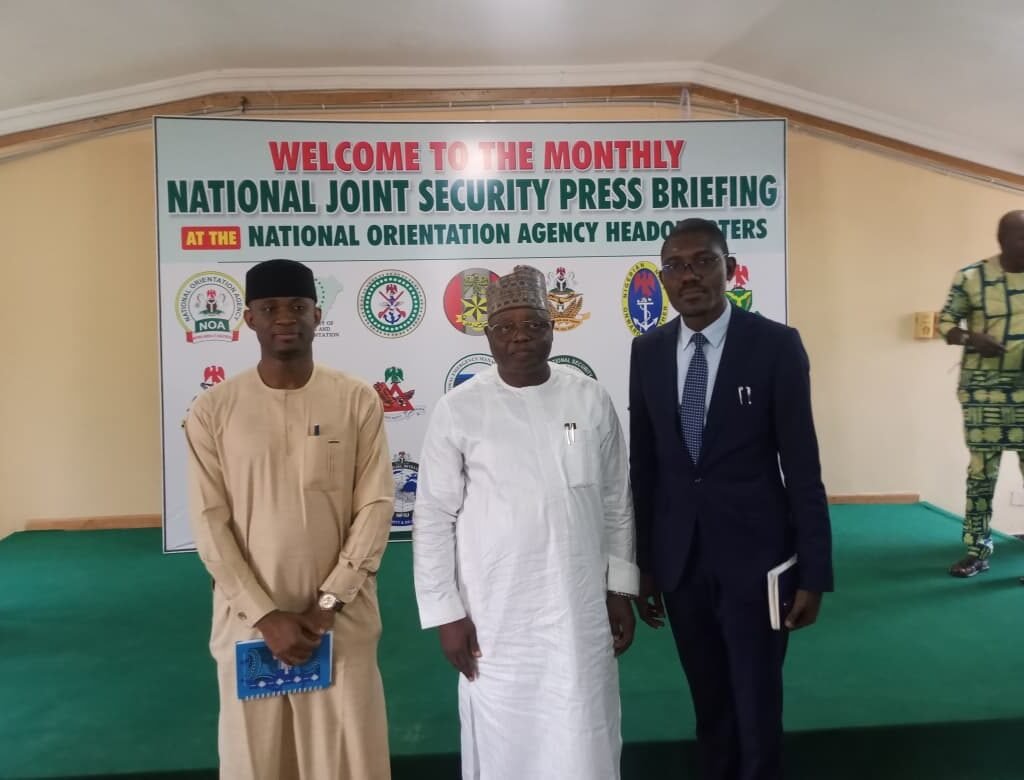
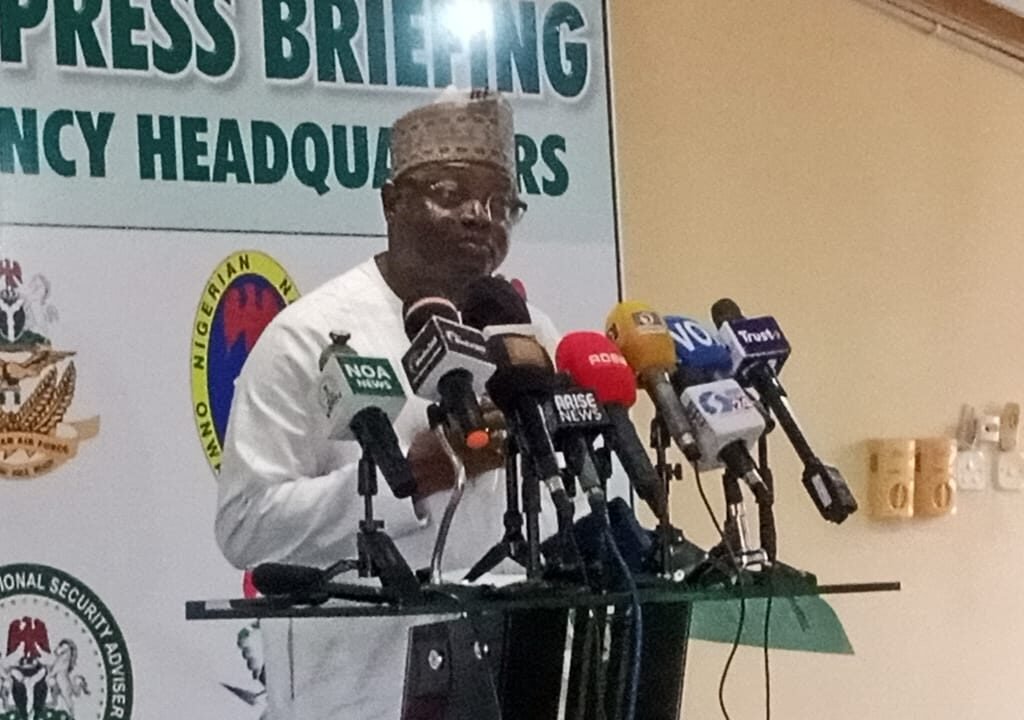
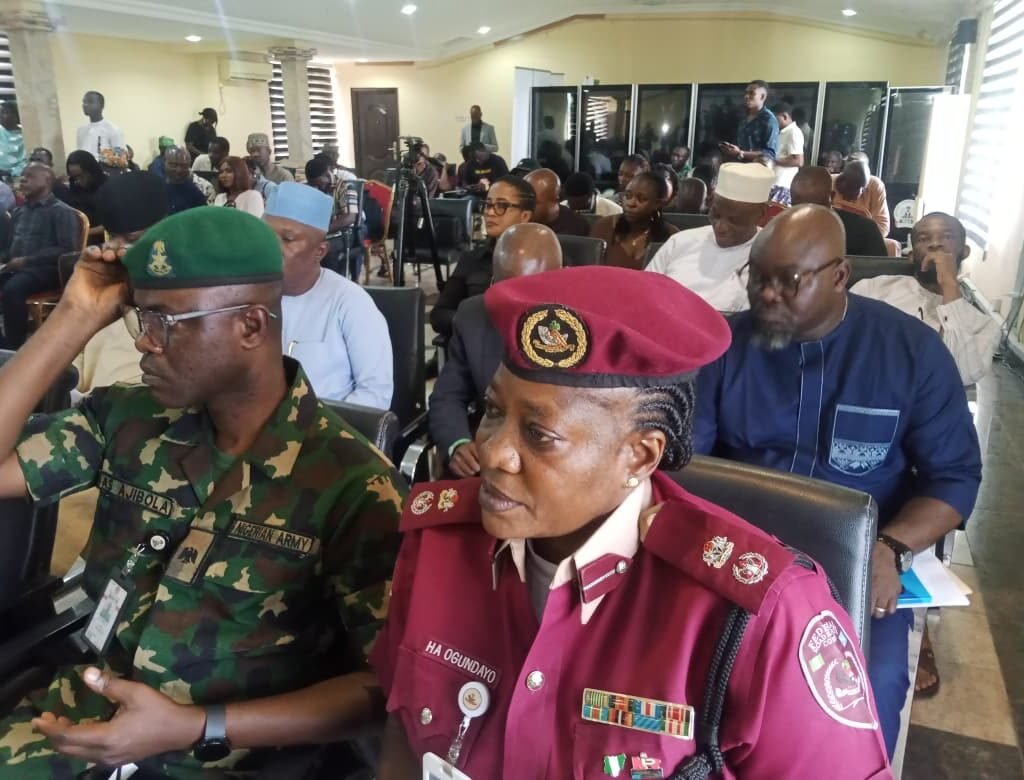
This was disclosed during the Monthly Joint National Security Press Briefing (JSPB) held at the National Orientation Agency (NOA) headquarters, Abuja, where the NOA Director-General, speaking on behalf of the stakeholder committee, highlighted key achievements across the country’s security and enforcement landscape.
According to the report, the Nigerian Army conducted 196 operations nationwide, targeting terrorists, insurgents, and bandits. The operations led to the rescue of 76 kidnapped victims in Katsina, the surrender of 36 terrorists in Borno, and the neutralisation of several ISWAP and JAS fighters. Weapon factories and gunrunners were also raided, disrupting local arms networks.
The Nigerian Police Force recorded 2,547 arrests, dismantled 37 criminal gangs, and recovered 212 firearms, ₦250 million in illicit funds, and 651 bags of cannabis.
In a major victory for the fight against narcotics, the National Drug Law Enforcement Agency (NDLEA) dismantled 37 drug syndicates, arrested 1,763 suspects (including 194 females), and seized over 212,000 kilograms of narcotics. The Agency also intensified rehabilitation efforts for hundreds of offenders and issued multiple public advisories on drug abuse prevention.
The Nigeria Customs Service (NCS) generated an impressive ₦658.6 billion in revenue for September alone through enhanced digital enforcement systems. The Service also intercepted firearms, industrial drones, and other high-risk contraband in the Southwest region, further reinforcing border integrity and economic accountability.
Meanwhile, the Federal Road Safety Corps (FRSC) responded to 589 road crashes, rescuing 3,848 people, including 1,834 injured victims, while 282 fatalities were recorded. The Corps also transitioned fully to paperless administration with the launch of an Electronic Document Management System (EDMS) and recovered 16 stolen vehicles through its National Vehicle Identification System (NVIS).
In the anti-corruption drive, the Independent Corrupt Practices and Other Related Offences Commission (ICPC) recovered ₦446 million, restrained ₦172 million, and secured three convictions, while establishing eight new Anti-Corruption Units across government agencies.
The Nigerian Financial Intelligence Unit (NFIU), on its part, flagged illegal mining as a growing terrorism-financing channel, prompting new partnerships with the UK High Commission and other international bodies to trace and freeze illicit fund flows linked to extremist networks.
Across other agencies, the Nigeria Immigration Service (NIS) intercepted 20 trafficking victims in Jibiya, repatriated 48 Nigerians from Niger Republic, and processed over 13,000 visas, while intensifying border protection and migrant sensitisation.
The National Agency for Food and Drug Administration and Control (NAFDAC) also made breakthroughs in product enforcement, confiscating several containers of falsified medicines and substandard goods, and for the first time — carrying out joint enforcement operations inside military barracks in collaboration with the Nigerian Navy.
According to the NOA, these outcomes collectively underscore Nigeria’s evolving security architecture one anchored on collaboration, intelligence, transparency, and citizen participation.
“Trust remains Nigeria’s strongest security asset,” said the NOA Director-General. “Where there is trust, there is compliance. And where there is understanding, there is cooperation. Every citizen has a role to play in safeguarding our nation.”
The NOA also cautioned against the spread of fake news and misinformation on security matters, urging the media and citizens to rely on verified updates from official agencies.
As Nigeria consolidates these gains, the government reaffirmed its commitment to making security operations more preventive, technology-driven, and people-centred ensuring that peace and stability remain shared achievements between citizens and the state.