
By Gabriel Ameh
Abuja, February 19, 2026 – The Federal Government has launched a new Sexual Assault Referral Centre (SARC) in Abia State as part of efforts to strengthen Nigeria’s response to Gender-Based Violence (GBV) and expand access to survivor support services nationwide.
This was contained in a statement signed by Ahmed Lawan Danbazau Head, Press and Public Relations Federal Ministry of Women Affairs and Social Development
According to the statement, the Minister of Women Affairs and Social Development, Imaan Suleiman-Ibrahim, described the Centre as a strategic intervention aimed at reinforcing Nigeria’s protection framework for women and girls.
Speaking at the inauguration, the Minister noted that GBV remains pervasive, underreported, and increasingly complex, particularly with the rise of digital and technology-facilitated abuse.
“Today marks a major step in strengthening the protection architecture for women and girls in Nigeria,” she said. “The establishment of this Sexual Assault Referral Centre provides a safe, confidential, and integrated platform for medical care, psychosocial support, legal referral, and justice services for survivors.”
According to the Minister, Nigeria currently has 50 Sexual Assault Referral Centres across 24 states, which have collectively assisted 58,134 survivors as of November 2025.
However, she acknowledged that the figures remain inadequate compared to the scale of reported and unreported cases nationwide.
She emphasized that a functional SARC ensures coordinated, survivor-centred services under one framework, warning that fragmented interventions often deepen trauma and undermine justice outcomes.
The Minister also raised concerns over the growing threat of technology-driven GBV, including cyberstalking, online trafficking, digital coercion, image-based abuse, and coordinated online harassment.
“These emerging threats demand stronger institutional response systems that integrate legal, psychosocial, medical, and digital protection mechanisms,” she stated, adding that the Abia Centre is designed to address both traditional and evolving forms of violence.
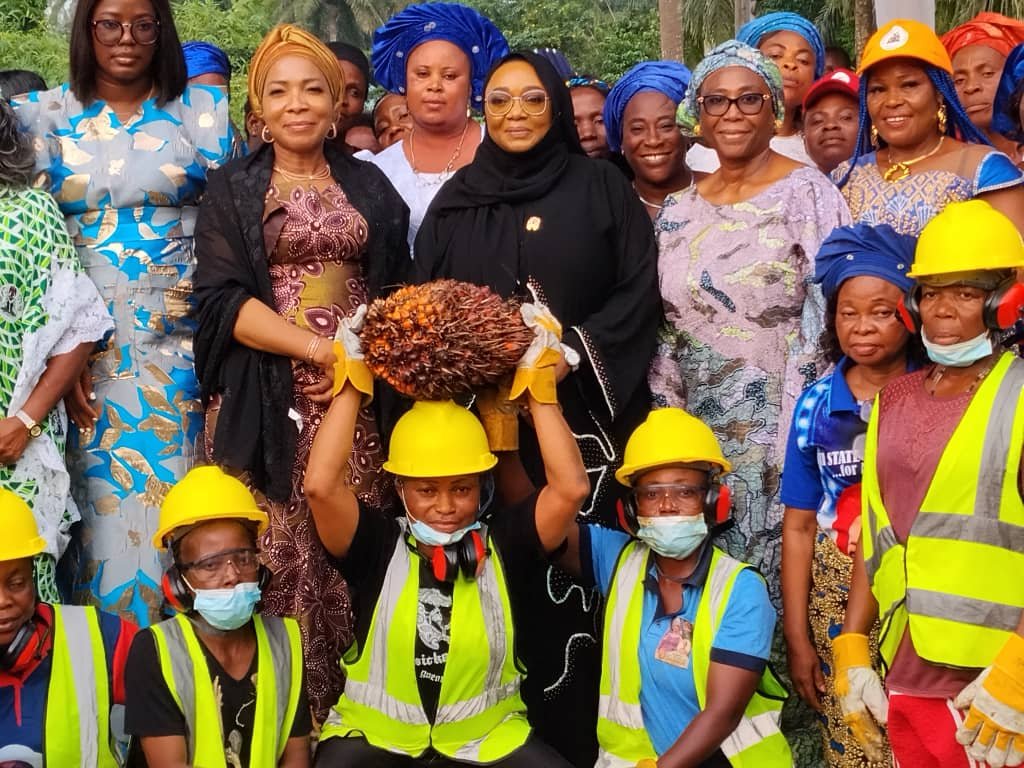
Beyond emergency response, the Minister highlighted complementary initiatives such as the Osusu Abaala Women Palm-Oil Collective, which aims to strengthen women’s economic resilience and reduce vulnerabilities linked to abuse and exploitation.
“When women are economically secure and institutionally supported, their exposure to exploitation and dependency significantly declines,” she said.
Reaffirming the Federal Government’s commitment, she stated that the Ministry will continue to strengthen Nigeria’s GBV response architecture through policy reforms, improved data coordination, survivor support systems, and strategic partnerships under the Renewed Hope Social Development Agenda.
She commended Bola Ahmed Tinubu for declaring 2026 as the Year for Social Development and Families, describing the move as a significant step toward positioning protection services as a pillar of national stability and social justice.
The Minister expressed appreciation to the Abia State Government and development partners for their collaboration in establishing the Centre, stressing that effective sub-national leadership remains essential in building safer communities.
“Silence, stigma, and impunity must no longer define the experience of survivors,” she declared. “Access to justice, care, and protection must become the national standard.”
She expressed confidence that the Centre would operate with professionalism, confidentiality, accountability, and compassion, serving as a safe space for healing and a model for replication across other states.