
By Gabriel Ameh
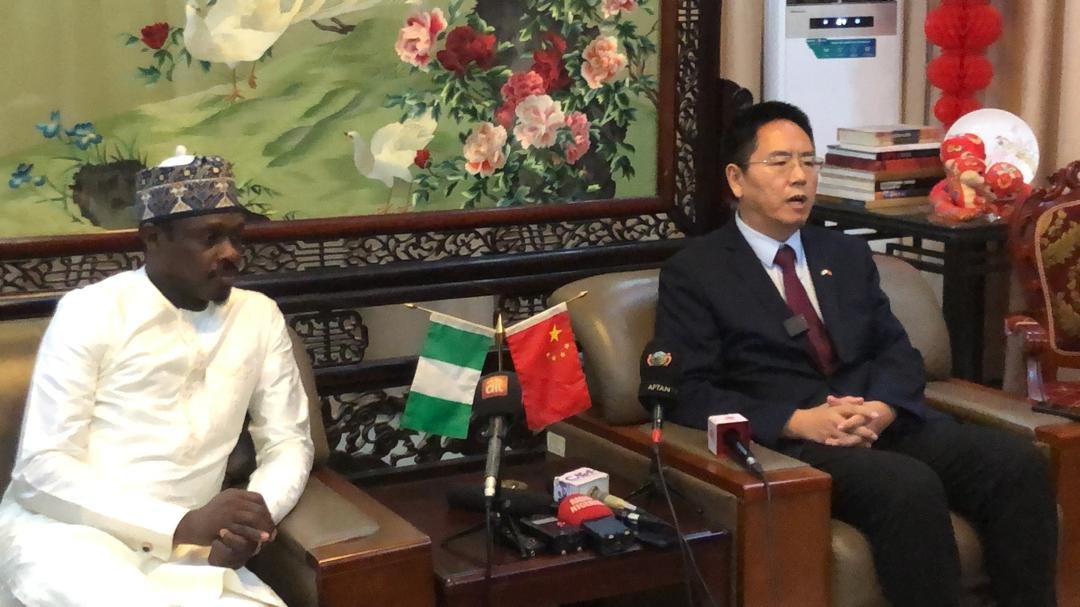
The Counsellor of the China Cultural Centre in Nigeria, Yang Jianxing, has said cinema is fast becoming a new and powerful bridge of diplomacy between China and Nigeria, strengthening cultural understanding and deepening people-to-people ties between both nations.
Speaking at a masterclass and special screening of the award-winning Chinese documentary Rooting, held at the Chinese Embassy pavilion during the Zuma International Film Festival in Abuja, Jianxing described the event as “not just a cinematic feast, but a dialogue between civilisations and a testament to friendship.”
Representing the Chinese Embassy, the envoy said the featured documentary filmed over four years in Yunnan Province is “a condensed visual chronicle of China’s poverty alleviation efforts.”
He explained that the film follows the journey of a rural villager whose life is transformed through targeted government policies, earning the documentary multiple international film festival awards.
According to him, Rooting mirrors development hopes familiar to many Nigerians.
The film’s theme resonates deeply with the Nigerian people’s aspirations for national development and a better life. We believe its authentic footage and heartfelt narrative will strongly connect with audiences,” he said.
Jianxing expressed gratitude to the Zuma Film Festival organisers and key figures in the Nigerian creative industry for sustaining cultural collaboration.
On behalf of the Chinese Embassy and the China Cultural Centre in Nigeria, I express my sincere appreciation to the Organising Committee of the Zuma International Film Festival for their meticulous preparation and warm invitation,” he noted.
He also commended the Chinese filmmakers, Director Chai Hongfang and Director of Editing Zhou Xinxia, for travelling from China for the screening, and acknowledged the support of China Harbour Engineering Company (Nigeria) Ltd.
Highlighting the dynamism of both nations’ movie industries, Jianxing noted that “China and Nigeria are world-renowned film-producing countries,” adding that Nollywood’s annual output of about 2,500 films makes it the second-largest film industry globally.
He described the Zuma International Film Festival as “an important window for exchange and mutual learning between civilisations.”
The envoy also pointed to China’s expanding cinema infrastructure, stating that “in 2024, the number of screens in China exceeded 90,000, and the total box office reached 6 billion US dollars,” underscoring the country’s evolution into a global film powerhouse.
He emphasised the cultural value of documentary filmmaking, despite its limited commercial rewards.
“We must pay our highest respects to Director Chai Hongfang, Director of Editing Zhou Xinxia, and their colleagues for their dedication and contributions to social progress,” he said.
Jianxing further announced that another documentary, SHENZHOU13 filmed by astronauts aboard the Shenzhou Space Station would also be screened at the festival.
“We believe this showcase of Chinese films will add another beautiful chapter to the cultural exchanges between our two countries,” he said.
Anchoring his remarks on broader policy direction, the envoy said the outcomes of the Fourth Plenary Session of the 20th CPC Central Committee emphasised stronger international cultural engagement. He reminded guests that 2026 has been designated the China-Africa Year of People-to-People Exchanges and expressed optimism for expanded cooperation in film and creative arts.
We look forward to deeper exchanges and collaboration between China and Nigeria in the film sector, helping to strengthen the friendship between our peoples,” he added.
Wishing the festival success, Jianxing concluded: “May the tree of friendship between China and Nigeria remain evergreen.”