By Gabriel Ameh
Thousands of residents in Benue State, particularly farmers from previously displaced communities, have commended the Nigerian military under Operation Whirl Stroke (OpWS) for restoring peace and strengthening security across the state, enabling safe return to farmlands ahead of the February farming season.
Families displaced by years of violent attacks linked to communal conflicts, kidnapping for ransom, and other criminal activities especially in Guma Local Government Area (LGA) are now gradually returning to their ancestral homes following sustained military operations.
Residents of Tatyough community in Guma LGA, who spoke to The First Mail, confirmed that many returnees have begun clearing their farmlands in preparation for planting, expressing renewed confidence in the heavy presence of Nigerian troops in the area.
One of the returnees, Victor Tor, a farmer, said the improved security situation encouraged him to return to his deserted community after years of displacement.
“The presence of troops has created a conducive environment for peace. I am a son of the soil, and many people like me are eager to return home to their ancestral lands,” Tor said, expressing happiness over the prevailing stability.
While acknowledging the progress recorded through ongoing military operations, Tor appealed for the sustainability of peace in Guma LGA and its extension to other parts of the state.
Similarly, Martha Tyo, a trader and early returnee, praised the military for restoring calm in the area, saying many displaced families are already making plans to return home.
She noted that routine military patrols have significantly reduced fear of attacks on farmers and residents, adding that improved civil-military relations would further encourage hesitant families to resettle permanently.
The First Mail had earlier reported on January 20 that security threats have reduced in several rural communities, including Yelwata and surrounding areas, following military clearance operations that yielded remarkable gains in addressing insecurity across the state.
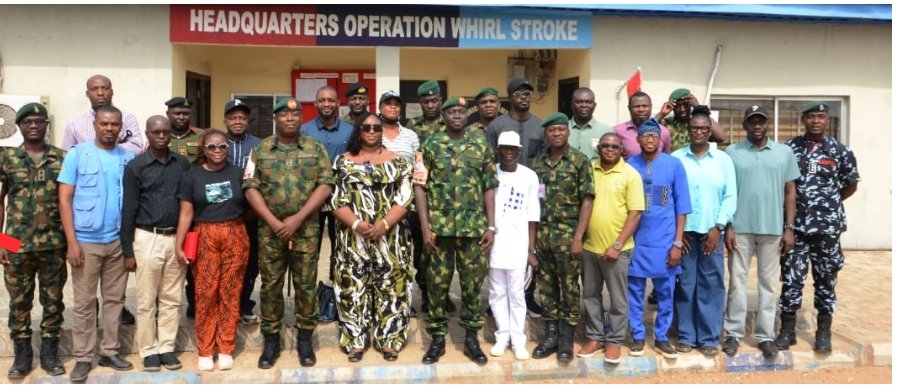
Speaking on the development, the Commanding Officer, COAS Intervention Battalion XI, Lieutenant Colonel Donatus Otobo, assured residents of sustained peace and protection. He gave the assurance while hosting Defence Correspondents on an operational media tour to the OpWS Headquarters in Makurdi.
Otobo said troops would maintain operational momentum, citing communities such as Tatio and Daudu, where significant security improvements have been recorded, allowing displaced residents to return home after years of absence.
Also speaking during a media interaction, the Commander of Operation Whirl Stroke, Major General Moses Gara, reaffirmed the military’s commitment to strengthening civil-military cooperation to consolidate peace.
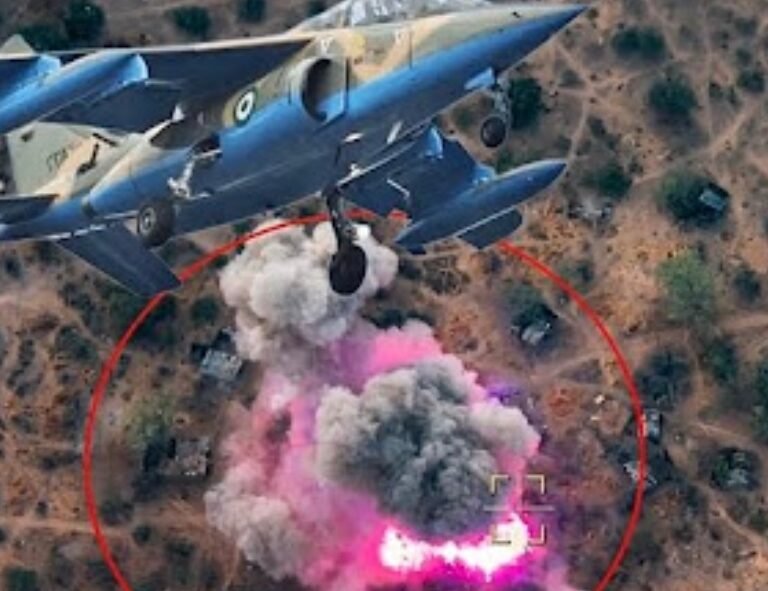
According to him, coordinated operations across Benue, Nasarawa, and Taraba States have resulted in the rescue of kidnapped victims, drastic reduction in crime, suppression of banditry and cattle rustling, neutralisation of criminal elements, and containment of armed militias responsible for communal violence.
Gara attributed much of the success to the military’s non-kinetic approach, including sustained dialogue and engagement with community leaders, religious authorities, and other stakeholders as confidence-building measures.
He assured that OpWS would continue inclusive engagements and partnerships with communities while maintaining robust military presence to ensure lasting peace and stability across its Areas of Responsibility.
However, the commanders expressed concern over the illegal acquisition of firearms by communities, often under the guise of self-defence, noting that such weapons frequently end up being used for criminal activities, thereby worsening insecurity and mistrust among communities.
Defence Correspondents were informed that intelligence reports have uncovered the existence of community armouries, where residents collectively contribute funds to procure weapons, a practice that has continued to fuel herder-farmer conflicts and empower criminal gangs.
Despite the challenges, the military leadership vowed to sustain operations to deny criminal elements freedom of action and drastically reduce attacks, killings, kidnappings, sexual violence, cattle rustling, and armed robbery across the region.