By Gabriel Ameh
ABUJA — The Friedrich-Ebert-Stiftung (FES) Nigeria has called for stronger policies, institutions and investments to ensure that the rapid adoption of Artificial Intelligence (AI) creates opportunities for Nigerian workers without leaving vulnerable employees behind.
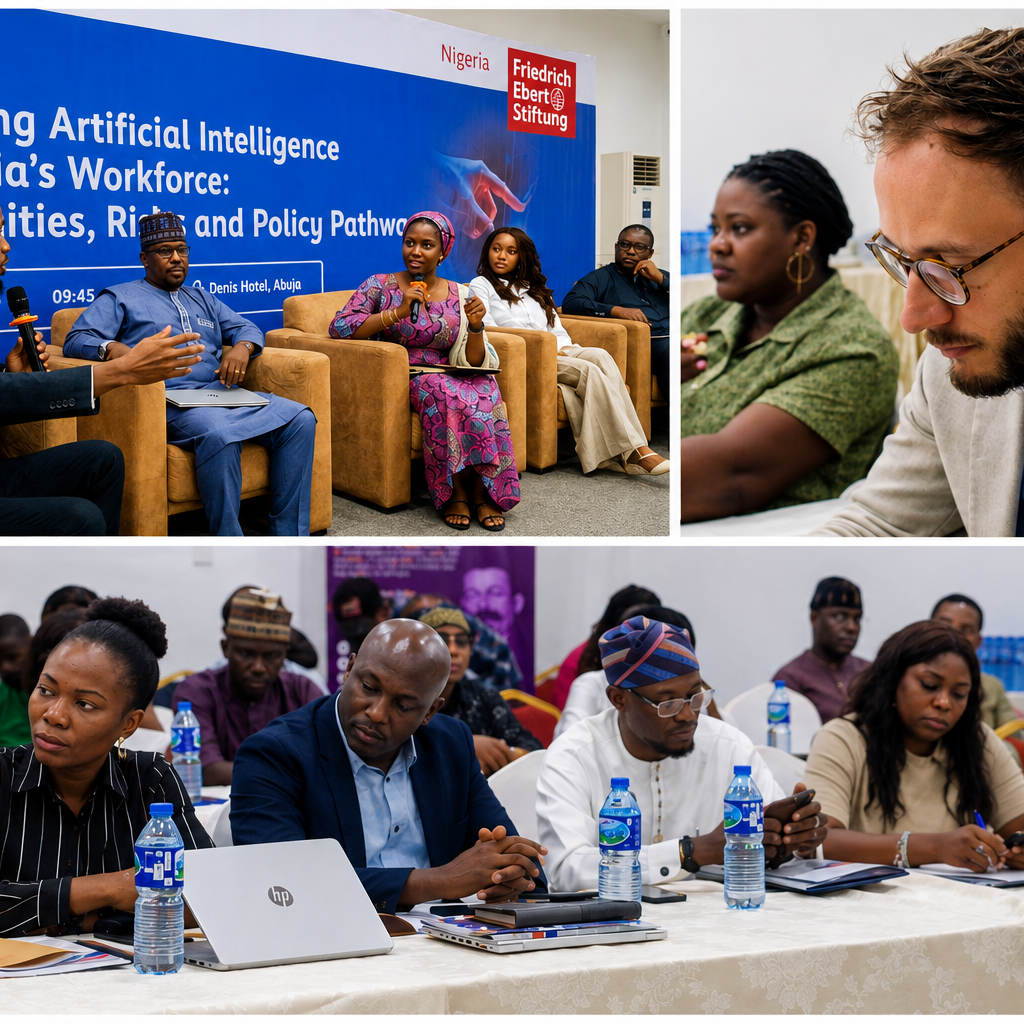
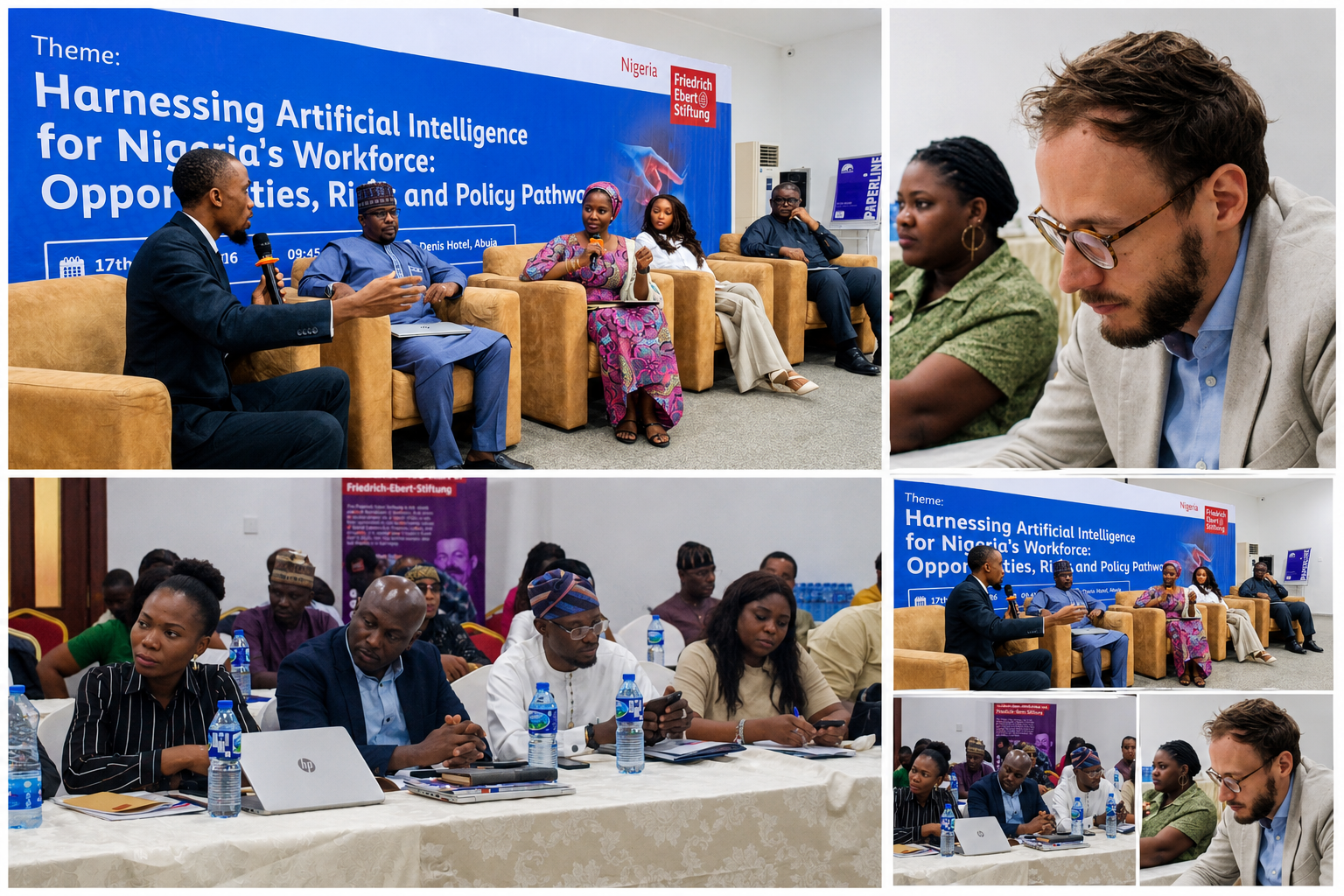
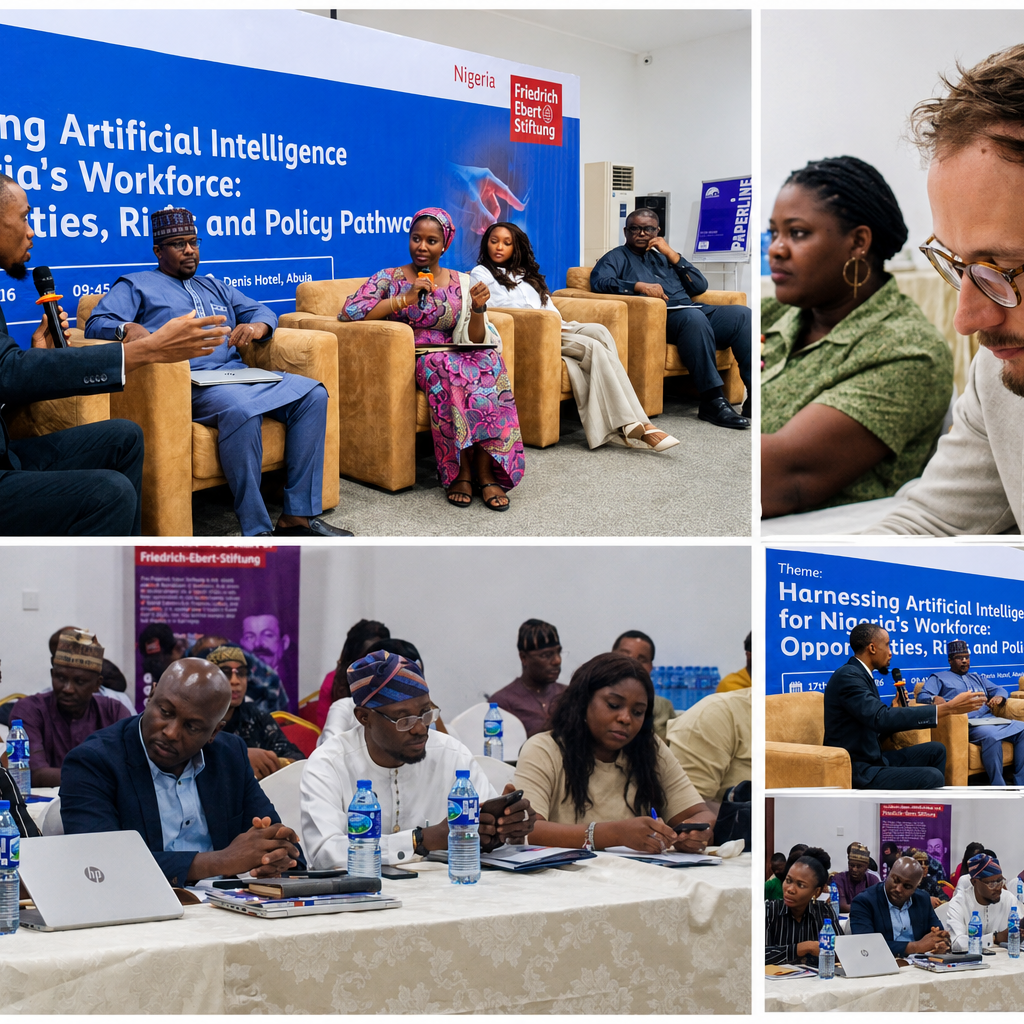
Speaking at a policy dialogue on “Harnessing Artificial Intelligence for Nigeria’s Workforce: Opportunities, Risks and Policy Pathways” in Abuja on Monday, August 17, 2026, FES Resident Representative, Lennart Oestergaard, said AI was already transforming Nigeria’s workforce and should no longer be treated as a distant technological development.
Oestergaard said AI was already being deployed in areas including banking fraud detection, recruitment, logistics and supply-chain management, making the key question no longer whether Nigeria would engage with the technology, but how AI would be deployed and who would benefit from it.
He identified increased productivity, new employment opportunities and economic diversification as some of the potential benefits of AI, stressing that Nigeria possesses the human capital and demographic strength to become a major AI player in Africa rather than merely a consumer of imported technologies.
However, he warned that the technology also presented significant risks, particularly the displacement of workers performing routine tasks and the possibility of algorithmic systems reinforcing discrimination in recruitment, workplace management and dismissal.
“Artificial intelligence is already reshaping Nigeria’s workforce. Not in the future — now,” Oestergaard said.
He stressed that without appropriate governance, the costs of technological transition could disproportionately affect workers who are least prepared to adapt.
According to him, the challenge requires institutions capable of ensuring that the benefits of technological advancement are broadly shared.
FES proposes National AI Council
Oestergaard called for the establishment of a National AI Council that would bring government, industry, labour, academia and other stakeholders together to coordinate Nigeria’s response to the opportunities and risks associated with AI.
He also advocated legal frameworks to regulate algorithmic management and protect workers’ data, alongside large-scale investments in reskilling programmes targeted particularly at workers most vulnerable to technological displacement.
The FES representative further emphasised the need for workers and trade unions to have a meaningful voice in decisions concerning the introduction of AI into workplaces.
He argued that unions should not merely be consulted after major decisions had been taken, but should participate as advocates, negotiators and partners in shaping Nigeria’s AI transition.
Germany’s transition offers lessons
Oestergaard cited Germany’s transition away from coal as an example of how major economic and technological transformations could be managed through negotiation, political commitment, investment in retraining and sustained social dialogue.
He noted that while the German experience was neither perfect nor quick, it demonstrated that workers could be brought into economic transformation rather than being abandoned to bear its consequences.
“For FES, this is not an abstract debate,” he said, noting that the organisation’s work on decent work in Nigeria dates back to 1976.
He said the central question remains how society can ensure that the gains of economic transformation are broadly shared while preventing workers from carrying the costs alone.
Experts examine AI, employment and workers’ rights
The policy dialogue featured two panel discussions bringing together representatives from government, organised labour, academia, employers, civil society and the private sector.
The first panel, “Artificial Intelligence (AI), Employment and the Future of Work in Nigeria,” was moderated by Hassana Maina, Board Member of the Public and Private Development Centre (PPDC).
Panelists included Basil Abia, Co-Founder of Truva Intelligence; Dr. Muttaga Yusha’u, Head of Education and Training at the Nigeria Labour Congress (NLC); Dr. Omadachi Oklobia, Department of Policy and Administration, African University of Science and Technology (AUST); and Veronica Pana Igube of the Federal Ministry of Communications, Innovation and Digital Economy.
The panel examined how AI could affect employment, productivity, skills development and Nigeria’s broader labour market, while considering policy measures needed to manage potential disruptions.

Policy brief highlights pathways for AI adoption
The event also featured the presentation of the policy brief “Harnessing Artificial Intelligence for Nigeria’s Workforce,” presented by Basil Abia of Truva Intelligence.
The presentation focused on the central arguments, evidence, risks and recommendations contained in the policy document, with emphasis on developing an inclusive approach to AI adoption that recognises both technological opportunities and the potential impact on workers.
A second panel, titled “Worker Rights, Skills and Social Dialogue as a Bedrock for Building a National Framework for Inclusive AI Adoption,” was moderated by Suzie Okome, Programme Officer at the Solidarity Center.
The panel featured Ms Inviolata Chinyangarara, Senior Specialist, Workers’ Activities/ACTRAV at the International Labour Organization (ILO), and Femi Samuel Paul, Acting Senior Executive, Corporate Affairs and Interim Head of the Nigeria Employers’ Consultative Association (NECA).
The discussion focused on worker rights, skills development, social dialogue and the need for a national framework capable of ensuring that AI adoption does not deepen existing inequalities in Nigeria’s labour market.
Nigeria urged to shape—not merely adapt to—AI
Oestergaard said Nigeria’s response to AI should go beyond preparing workers to survive technological disruption.
He challenged policymakers and other stakeholders to actively shape the direction of AI adoption in a way that reflects the interests of Nigerian workers.
“Nigeria should not simply adapt its workforce to the future of AI. Nigeria should help shape a future of AI that works for its workforce,” he said.
The Abuja dialogue therefore underscored the growing need for Nigeria to balance technological innovation with employment protection, skills development, workers’ rights and inclusive economic growth as AI becomes increasingly embedded in the country’s economy.