
By Austine Okere and Mukhtar Modibo
In early July, a long-feared reality materialised for millions of people worldwide, particularly those working within the development aid ecosystem: the United States Agency for International Development (USAID) shut down its operations. As the world’s largest single aid donor disbursing approximately $72 billion in 2023, and accounting for over 40 percent of all UN-tracked humanitarian aid in 2024 USAID’s absorption into the U.S. Department of State signals a profound shift in the global development landscape.
This shift is already having disproportionate consequences for developing regions, especially Africa.
Since 2025, development assistance to Africa has faced steep reductions. The Organisation for Economic Co-operation and Development (OECD) estimates cuts of 16 to 28 percent, largely affecting bilateral overseas development assistance. At the same time, donor priorities have increasingly tilted toward short-term humanitarian responses such as migration management, conflict response, and pandemic preparedness.
In 2023 alone, Official Development Assistance (ODA) to developed countries rose to $43 billion, while spending on asylum seekers and refugees within donor countries stood at $31 billion. By contrast, ODA to Africa fell by nearly seven percent to $40 billion, while aid to Latin America and the Caribbean declined by 15 percent to $14 billion.
Localization Amid a Shrinking Aid Space
Against this backdrop of shrinking resources, donors and international non-governmental organisations (INGOs) operating in Africa are under pressure to identify more cost-effective and impactful ways to deliver aid. Funding gaps have opened space for foundations such as the Conrad N. Hilton Foundation to support a wider range of beneficiaries beyond traditional bilateral and INGO funding structures. This has renewed interest in local direct implementation commonly referred to as localization.
However, for many community-based organisations (CBOs), civil society organisations (CSOs), and local NGOs, localization remains fraught with challenges. Diminishing resources, high administrative costs, and rigid donor requirements often force local actors to redesign programmes to fit externally imposed frameworks that may be disconnected from local realities. The result is frequently ineffective or unsustainable interventions.
These concerns are amplified by growing advocacy for “Southern Agency” or “African Agency,” which calls for greater decision-making power for African institutions in shaping their own development pathways.
African-Led Reflections on Localization
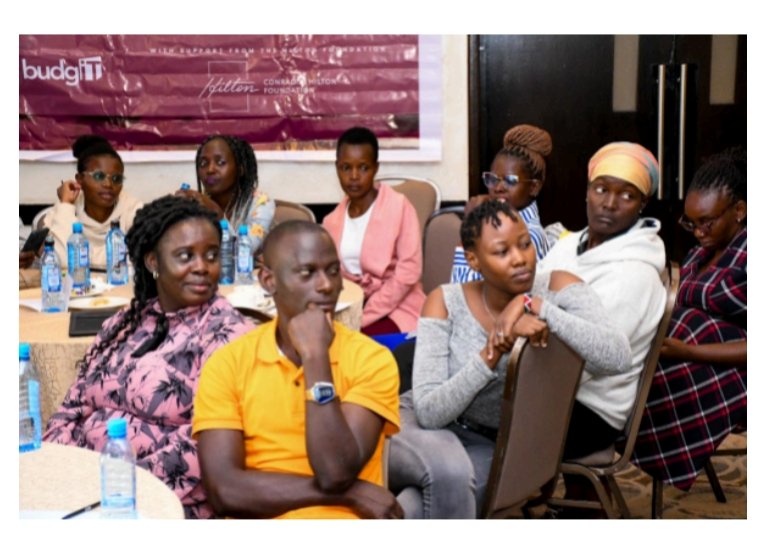
To better understand what localization means in practice, BudgIT and CODL, with support from the Conrad N. Hilton Foundation’s commitment to “big solutions and local partnerships,” undertook an After-Action Review (AAR)—also known as Pause and Reflect sessions in Kenya and Senegal.
The sessions documented lived experiences of local organisations, focusing on what worked, what did not, and why. They explored power imbalances, funding access, trust deficits, accountability challenges, and how these factors influence development outcomes. The goal was to distil lessons and define practical next steps for advancing localization in Africa.
Insights from Kenya and Senegal
Participants in both countries examined the gap between localization rhetoric and lived reality. Through facilitated dialogue, recurring barriers emerged: skewed power dynamics, opaque funding flows, limited donor trust, and shifting national policies affecting registration and compliance.
In Kenya, CBOs particularly those working on social accountability reported that localization commitments often fell short in practice. Donor and INGO selection criteria for project locations were frequently unclear, leading to heavy concentration of projects in areas such as Turkana, Marsabit, Kibera, West Pokot, Dandora, Kisumu, and Laikipia. While these regions face acute humanitarian needs, the clustering of interventions has strained local capacity and distorted long-term development planning.
A similar pattern was observed in Senegal, where projects are concentrated in Dakar, Thiès, and Ziguinchor. Participants noted that despite strong localization language, donors often retain control over priorities and implementation methods. Aid continues to pass through multiple intermediaries, reducing efficiency and impact. There was also concern over misalignment between donor thematic priorities and local needs, alongside calls for frameworks that better reflect Senegal’s cultural and social realities.
The COVID-19 pandemic further complicated localization efforts. During the crisis, large volumes of funding flowed into health systems and emergency response, prompting many local organisations to pivot their work. However, post-pandemic, key localization principles such as equitable partnerships, capacity strengthening, and shared decision-making have weakened, eroding the sustainability of gains made during that period.
Moving Forward: From Rhetoric to Redesign
The Pause and Reflect process makes one thing clear: localization must move beyond rhetoric to structural redesign. Building on insights from Kenya and Senegal, the next phase of this initiative will take place in Nigeria, where similar experiences will be documented and compared to identify common patterns and context-specific solutions.
As the global development aid landscape continues to evolve, funders must invest not only in programmes but also in the financial resilience, strategic capacity, and long-term sustainability of local actors. This includes strengthening trust funds and endowments, rewarding authenticity and consistency, and supporting principled yet pragmatic local advocacy.
Ultimately, true localization is not about transferring projects it is about transferring power. And that process begins with trusting, equipping, and enabling local institutions to lead their own development journeys.