
By Chioma Favour Abuja October 5, 2025
In a major step towards ensuring food security and empowering the next generation of farmers, the Federal Government has unveiled sweeping reforms aimed at modernizing agricultural education across the country.
This was contained in a statement signed Boriowo Folasade Director, Press and Public Relations
Federal Ministry of Education
According to the statement, the initiative, jointly driven by the Federal Ministry of Education and the Federal Ministry of Agriculture and Food Security, seeks to update agricultural curricula, attract young Nigerians into the sector, and align academic training with President Bola Ahmed Tinubu’s Renewed Hope Agenda for a technology-driven and productive agricultural economy.
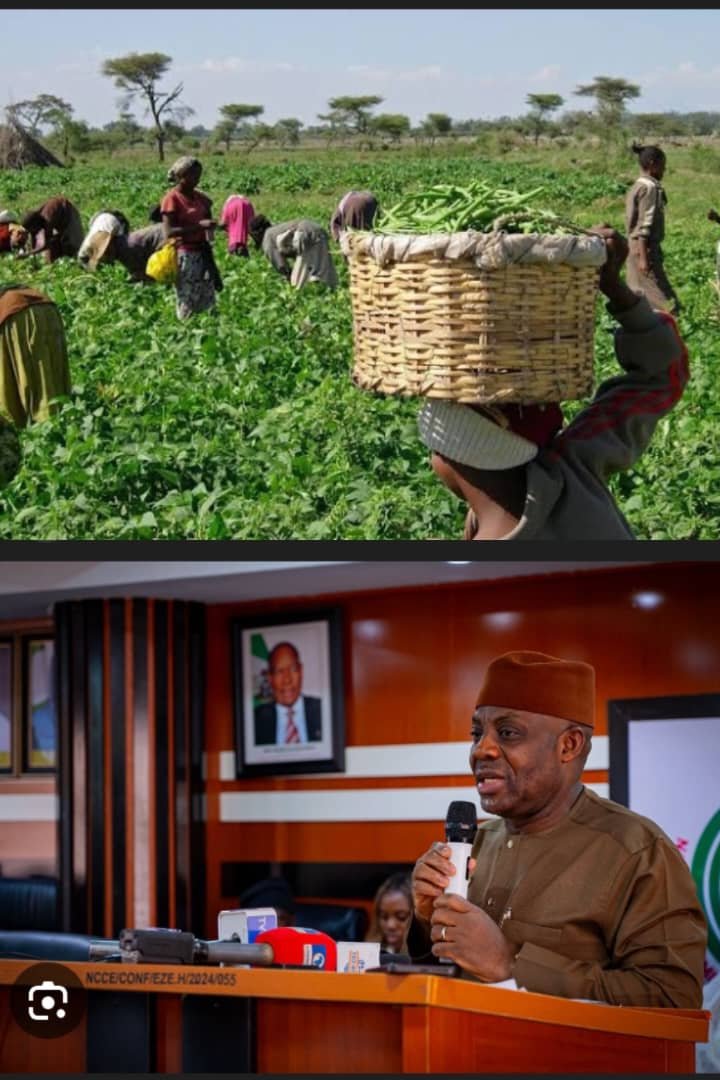
Speaking during the official presentation of the new Agricultural Curriculum Framework in Abuja, the Honorable Minister of Education, Dr. Maruf Tunji Alausa, CON, described the reform as “a pivotal step in repositioning agriculture as a pillar of national development.”
Dr. Alausa expressed concern over the declining enrolment in agricultural programs across Nigerian universities, despite the sector’s critical role in the nation’s economy. He revealed that in the 2024 UTME admission statistics, nearly half of the admissions allocated to agricultural courses were left unutilized.
“Agriculture is a major national priority, but enrolment in higher institutions is dropping,” he said. “Thousands of slots in agricultural courses remain vacant yearly. This is alarming for a country that depends on agriculture for food security and economic stability.”
The Minister contrasted this trend with the rising interest in vocational and technical agricultural training.
“Out of more than 900,000 TVET applications received recently, over 210,000 were for livestock farming alone,” Dr. Alausa stated. “This clearly shows that young Nigerians are eager to acquire practical agricultural skills, but the outdated tertiary curriculum is not keeping pace with modern realities.”
He reaffirmed the Ministry’s commitment to revitalizing agricultural education and making it relevant to today’s industry needs.
“The Ministry of Education, working with state governments, has resolved to modernize the curriculum to meet the demands of modern agricultural practice,” he said. “Under President Tinubu’s Renewed Hope Agenda, we are already developing Special Agricultural Processing and Production Zones that will add value, create jobs, and make Nigeria an export hub for agricultural products.”
Citing regional success stories, Dr. Alausa referenced the Republic of Benin’s cotton-processing transformation, which boosted the country’s export earnings from $500 million to $12 billion and created over 25,000 youth jobs. He noted that Nigeria is ready to replicate similar success through curriculum reform and practical training.
Also speaking, the Honorable Minister of State for Agriculture and Food Security, Senator Dr. Aliyu Sabi Abdullahi, underscored the need to align education with the nation’s food sovereignty goals.
“Nigeria’s food security cannot be achieved without reforming how we train our agricultural workforce,” he said. “We need to equip graduates not just with theory, but with practical skills and innovation that will drive transformation in the sector.”
The Agricultural Curriculum Framework, jointly developed by both ministries, provides a comprehensive roadmap for overhauling agricultural education, integrating technology, promoting youth enterprise, and linking education with real-world agricultural opportunities.
The Federal Ministry of Education reaffirmed its readiness to collaborate with institutions, state governments, and private stakeholders to ensure the implementation of a modern, inclusive, and industry-relevant agricultural education system that supports national growth.