

By Comfort Akor
Nigeria’s Minister of Foreign Affairs, Ambassador Yusuf Tuggar, has reaffirmed the Federal Government’s determination to restore professionalism, innovation, and strategic statecraft in the nation’s foreign policy and diplomatic engagements.
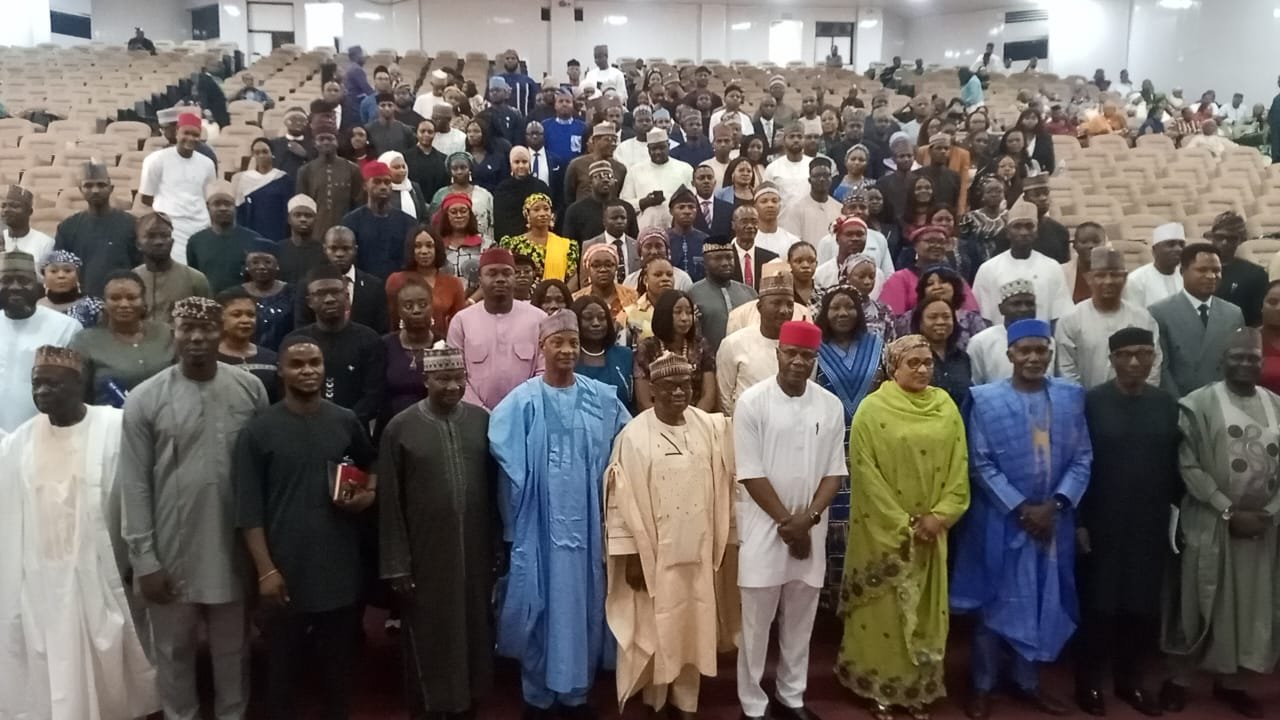
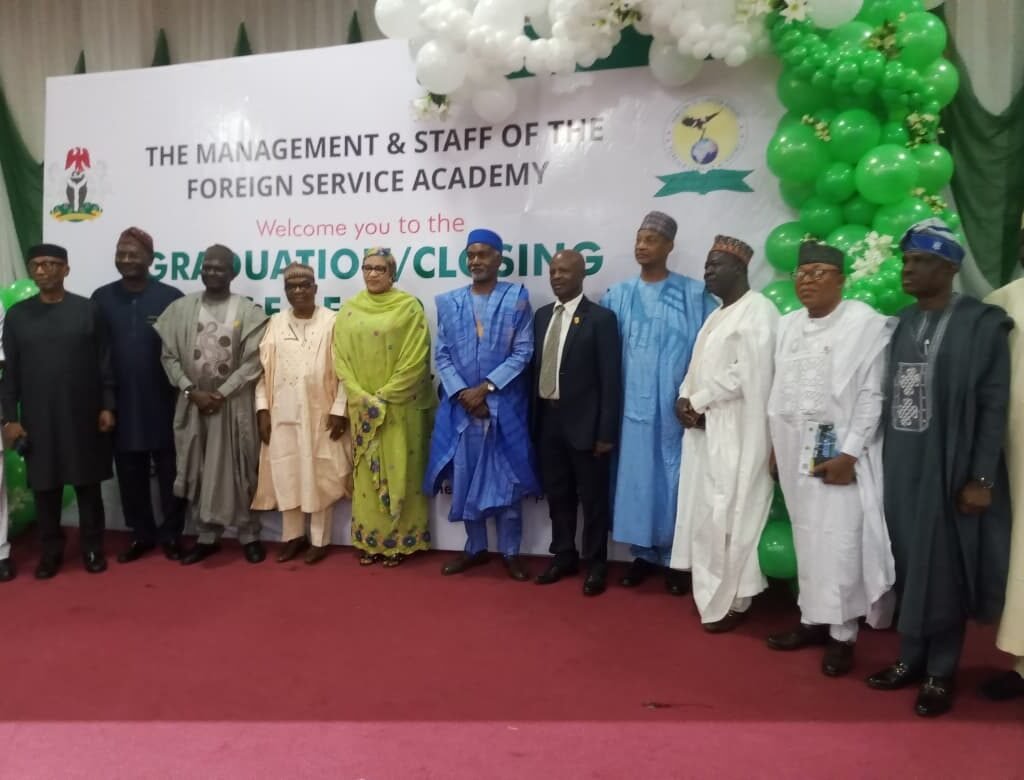
Ambassador Tuggar made this known while representing Vice President Kashim Shettima at the closing ceremony of the 26th Regular Course of the Foreign Service Academy (FSA) in Abuja.
Describing the ceremony as “an institutional milestone,” the Minister said the event marked the emergence of a new generation of diplomats who will serve as “the face, the voice, and the conscience of our nation on the global stage.”
He commended the Academy for nurturing the intellect and discipline of young diplomats, stressing that its revitalization is central to repositioning Nigerian diplomacy for the 21st century.
“The neglect of the Foreign Service Academy is emblematic of the diminishing role of diplomacy and diplomats in governance. It is my mission to restore statecraft to our relations with other countries and the starting point is with you: equipping our diplomats to compete globally,” Tuggar stated.
Championing Modern Diplomacy through Innovation
Ambassador Tuggar underscored the need for Nigerian diplomats to embrace innovation and technology as vital tools in modern diplomacy. He disclosed that the Ministry had established an Artificial Intelligence (AI) Desk and recently hosted a seminar on AI in Modern Diplomacy, aimed at integrating emerging technologies into Nigeria’s foreign policy practice.
He also announced that a comprehensive curriculum review of the Academy is underway following his inspection visit to its permanent site in Badagry, Lagos, with the goal of aligning training with global realities.
According to him, plans are ongoing to return the Academy to its permanent home through public–private partnerships and cooperation with international development partners.
Guided by Tinubu’s Four Pillars of Foreign Policy
Highlighting the Tinubu administration’s foreign policy thrust, Ambassador Tuggar reiterated that Nigeria’s diplomacy is now anchored on four key pillars Democracy, Development, Demography, and Diaspora which define the country’s engagement with the international community.
“Our missions must serve as economic outposts, actively promoting investment, trade, and technological cooperation,” he emphasized, urging diplomats to project Nigeria’s positive image and counter misinformation on issues such as religion and human rights.
Diplomatic Training and Excellence Recognized
Director of the Foreign Service Academy, Ambassador Chikezie Ogu, described the latest graduating class as one of the most exceptional cohorts in recent years. He commended the officers for demonstrating patriotism, discipline, and a deep sense of national duty throughout their training.
Ambassador Ogu revealed that the intensive training had inspired one of the participants to author a book titled “Traits of a Diplomat,” reflecting the intellectual and ethical growth fostered by the programme.
Similarly, the Director-General of the Nigerian Intelligence Agency (NIA), Ambassador Mohammed Mohammed, represented by Musa Abubakar, urged the new officers to uphold integrity, professionalism, and adherence to public service ethics as they represent Nigeria globally.
“As envoys of our nation, your words and actions must embody the dignity and ideals of the Federal Republic of Nigeria,” he said.