

By Archibong Esuene
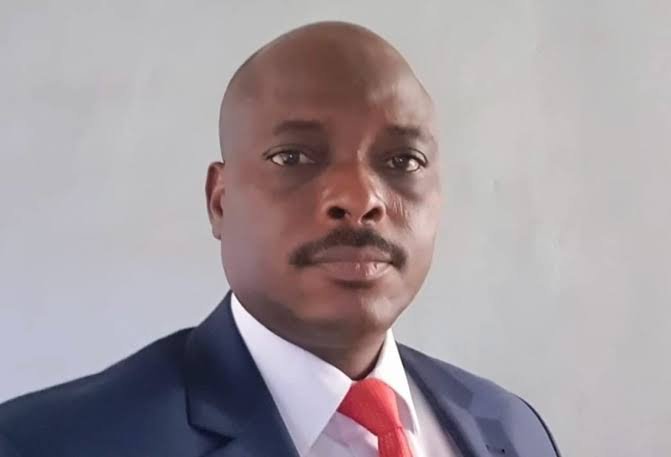
As Nigeria marks her 65th Independence anniversary, conversations about what truly defines progress have returned to the national stage. In a recent edition of Big Talk on Global TV, former lawmaker and geologist, Hon. Godfrey Ali Gaiya, offered thoughtful reflections on the country’s journey so far, a mix of gratitude, realism, and cautious hope.
Gaiya, who represented the Zangon Kataf/Jaba Federal Constituency of Kaduna State in the House of Representatives and once chaired the House Committee on Sports, appeared on the programme hosted by Topsy Ginba. His words captured both the frustration and resilience that have come to define Nigeria’s post-independence story.
Pondering on the nation’s founding dreams, Gaiya said Nigeria’s independence in 1960 was not by accident but by readiness. “Before the colonial masters left, we were already able to fend for ourselves,” he recalled. “We had human and natural resources, and the time of their exit was the best time for us.”
But 65 years later, he admitted, much of that optimism has been dimmed by the realities of governance, policy inconsistency, and unmet promises. “If a man of 65 still depends on others to feed and clothe him, you will say something is wrong,” he said, drawing a comparison between a nation’s age and its level of maturity. “We cannot continue to make excuses for what we should have outgrown.”
The former legislator lamented that Nigeria’s founding promises, stable electricity, potable water, quality education, good roads and affordable healthcare, remain elusive. Yet, he was quick to add that building a functional state takes time, sacrifice, and patience. “Some countries we admire today have existed for over 200 years,” he explained. “We are only 65. We were born with challenges, and those challenges will not disappear overnight.”
For Gaiya, the country’s greatest weakness lies in its inability to match words with action. “Every promise must have a premise,” he said. “When leaders make promises without laying the right foundations, those promises collapse.”
He blamed not only those in power but also ordinary citizens who, according to him, often sabotage government efforts through apathy, corruption, or misplaced criticism. “Government is not a separate entity. It is us. The leaders come from among us,” he stressed.
Despite his firm criticism, Gaiya’s tone was not that of despair. He spoke fondly of Nigeria’s resilience and diversity, describing them as sources of strength rather than division. “We must not forget that this is a very complex country — thousands of ethnic groups, languages, and faiths trying to become one nation. It’s not an easy project,” he observed. “But the fact that we are still together is proof of endurance.”
While acknowledging the setbacks of leadership transitions, civil war, and economic turbulence, Gaiya maintained that progress, though slow, is visible. “When we got independence, there was only one university — the University of Ibadan. Today, we have hundreds,” he noted. “Education is the first sign of advancement, and if we can continue to build on that, there is hope.”
To him, celebrating independence should go beyond parades and speeches. It should be a moment of introspection — a reminder that democracy thrives only when promises are kept and institutions are strengthened. “There is no perfect society anywhere,” he said. “But nations that succeed are those whose citizens believe, participate, and hold their leaders accountable.”
As Nigeria marks another milestone, Gaiya’s reflections on Big Talk strike a familiar but necessary chord: that independence is not an end but an ongoing process of building, rebuilding, and believing. His message is clear — the dream of a greater Nigeria is still alive, but it demands more patience, sincerity, and collective effort.
“We have come a long way. But the journey ahead will test our faith even more. What matters is that we keep moving- not in circles, but forward.”