

By Gabriel Ameh
The Chairman of the Independent National Electoral Commission (INEC), Prof. Joash Amupitan, SAN, has called on civil society organisations, community leaders, the media and Nigerians across the country to actively participate in the Claims and Objections exercise scheduled to open on December 15 as part of the first phase of the Continuous Voter Registration (CVR).
Prof. Amupitan warned that Nigeria’s democratic growth will remain stunted if the national voters’ register continues to carry the names of deceased, displaced, or otherwise ineligible persons, stressing that the integrity of elections begins with a credible register.
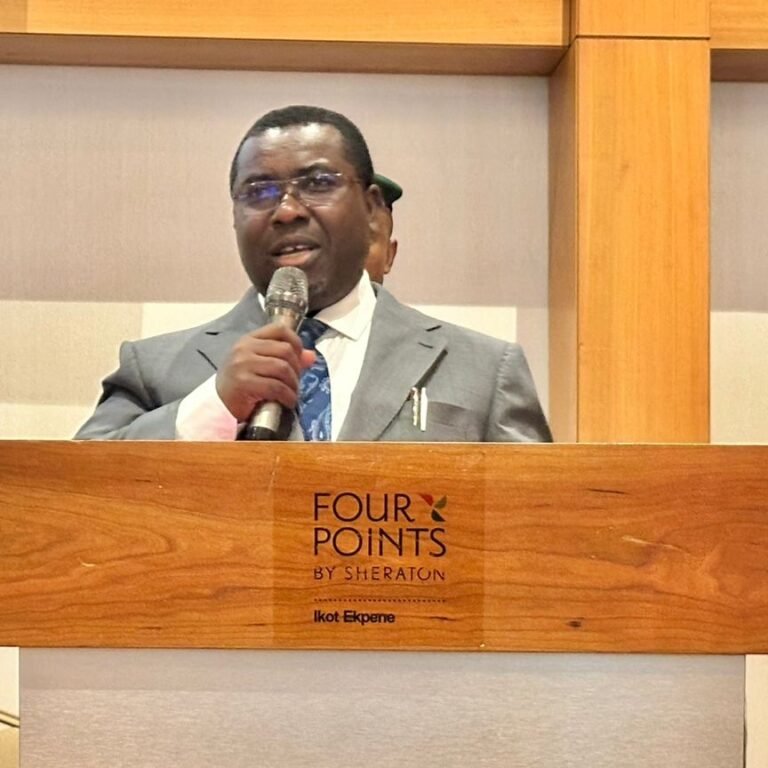
The INEC Chairman made the remarks in Abuja on Thursday at the Nigeria Civil Society Situation Room Stakeholders’ Forum on Elections, where he delivered what many attendees described as one of the most direct and reflective addresses on Nigeria’s electoral challenges and democratic future.
Barely two months into office, Prof. Amupitan said he considered his attendance at the forum on a day set aside for the Commission’s weekly management meeting a national duty. He underscored that the Claims and Objections phase is “a decisive and collective task,” noting that INEC alone cannot ensure a clean register without the active involvement of citizens.
He expressed concern that Nigerians often ignore the public display of the provisional register, resulting in unreported errors, duplications and retained names of deceased persons. Recalling his experience during preparations for the Anambra governorship election where he discovered that a well-known community leader who died during the 2020 lockdown still appeared on the register he said such lapses cast doubt on the credibility of elections.
“If we cannot clean up our register, we cannot claim credibility,” he said. “We need CSOs, community leaders and the media to mobilise Nigerians to examine the lists. INEC cannot do it alone.”
Providing an update on the just-concluded Phase 1 of the CVR, which ran from August 18 to December 10, the Chairman disclosed that the Commission recorded 2,685,725 registrations nationwide. Of these, 1,576,137 completed their registration online, while 1,109,588 were captured physically. He commended the growing political consciousness reflected in the figures, noting that Osun, Kano, Sokoto, Imo, Borno and Lagos states recorded the highest turnouts.
Prof. Amupitan announced that Phase 2 of the CVR will begin on January 5, 2026. In this phase, many registration centres will be moved closer to registration areas including hard-to-reach communities to reduce distance barriers identified during field assessments.
On the forthcoming FCT Area Council election scheduled for February 21, 2026, he described it as one of INEC’s most sensitive responsibilities since the Commission directly conducts local government elections only in the FCT. He noted that timelines and relevant information have been published, while consultations on logistics and security are ongoing.
The INEC Chairman touched on key themes ranging from security threats to democratic culture, technology deployment, voter turnout, legal frameworks and political accountability. While acknowledging insecurity as a persistent challenge, he cautioned stakeholders not to allow fear to dictate national response strategies.
Lamenting that Nigeria is still described as having a “nascent democracy” after more than two decades of uninterrupted civilian rule, he questioned when the country would begin to demonstrate democratic leadership on the continent beyond its size and population.
He argued that democracy is a cultural system, not a foreign ideology, insisting that Nigeria must adapt democratic principles to suit its social context rather than imitate external models without relevance to local realities.
Speaking on election technology, Prof. Amupitan said the introduction of the Bimodal Voter Accreditation System (BVAS) and the INEC Result Viewing (IReV) portal have significantly improved transparency. BVAS, he said, has eliminated over-voting and manual manipulation, while IReV has opened up the results process to public scrutiny in real time.
However, he stressed that technology alone does not solve all challenges. Network limitations across 176,000 polling units, he said, continue to impede real-time uploads. Recalling mock accreditation exercises in Anambra, he cited instances where poor network prevented instant data reflection and where some trained presiding officers faced difficulties in uploading results. He assured that INEC is working with telecom operators and the NCC to improve connectivity while exploring alternative technologies.
On voter apathy, he described low turnout sometimes as low as 22% as a serious threat to democratic legitimacy. He highlighted the Anambra governorship election, where he extended PVC collection by five days, including weekends, resulting in 98.8% collection and a doubling of voter turnout. This, he said, demonstrates that targeted interventions can drive participation.
Prof. Amupitan also addressed the scourge of vote-buying, calling it one of the most damaging threats to Nigeria’s democracy. He revealed that some political actors admitted to vote-trading during pre-election engagements in Anambra, leading to arrests. He said the Commission has written to the police, EFCC and other agencies to request updates on the cases, stressing that while INEC can prosecute, it cannot arrest.
He maintained that credible elections rely on cooperation not suspicion between all stakeholders, including political parties, security agencies, the media, CSOs and the Commission.
Reiterating that democracy is a continuous, lifelong process, he said Nigeria must rebuild public trust, renew civic responsibility and anchor its electoral system on integrity. Quoting Kofi Annan and Jim Kator, he reminded the audience that democratic values and citizenship are cultivated over decades.
Returning to his central message, he urged Nigerians to take full advantage of the Claims and Objections period, which opens December 15, to help clean the register. With Phase 2 of the CVR set to begin on January 5 and the FCT Area Council election fast approaching, he stressed that now is the time for citizens to assume responsibility.
“We must all join hands,” he said. “INEC is doing its part, but democracy cannot thrive if the people themselves do not protect and purify the process. Let us seize this opportunity to clean our register, strengthen our elections and continue the journey toward the democracy we all desire.”
Editor-in-Chief: Mrs. Victoria Eta-Messi
Editor: Wilfred Ifogah
Sub-Editor: Esther Chibuikem
Reporter: Nathaniel Audu Gana