
By Sam Dodo
📍Abuja | Media Report
The Federal Road Safety Corps (FRSC) has announced a major breakthrough in its ongoing efforts to reduce tanker and trailer-related road crashes, recording a 61.29% drop in fatalities and a 15.53% reduction in crash severity index in 2025.
The Corps attributed the improvement to the effective implementation of the Safe-to-Load Programme under the leadership of the Corps Marshal, Shehu Mohammed.
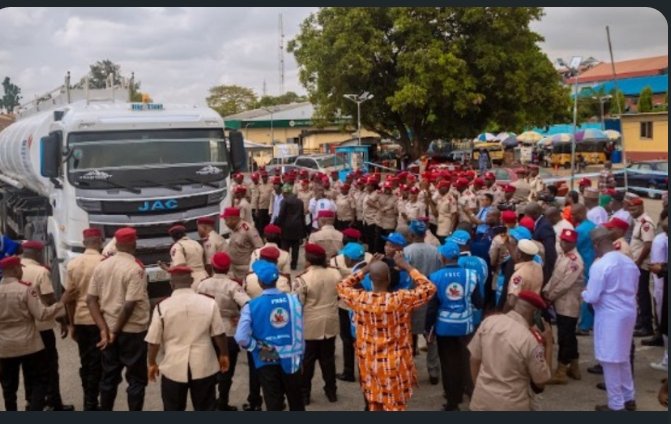
The announcement was made during the flag-off of the 2026 Technical Training for FRSC Desk Officers at petroleum depots and terminals in Lagos.
According to the Corps, the Safe-to-Load Programme introduced in 2015 has significantly improved compliance with safety standards in the petroleum haulage sector and aligned Nigeria with global protocols for transporting dangerous goods.
The FRSC noted that compliance with Class G Driver’s Licence requirements has risen from 58.2% at inception to 99.4%, while the installation of critical safety systems, including API-standard leak-proof mechanisms, has reached 98.3%.

Despite the progress, the Corps warned that enforcement will remain strict, stressing that any tanker failing Safe-to-Load requirements will be denied loading without exception.
It also stated that all tanker-related crashes will undergo comprehensive investigations covering the entire logistics chain, including depot operators and vehicle owners.
The Corps Marshal further condemned violations such as tampering with speed limiters and poor vehicle maintenance, describing them as serious threats to road safety.
Reaffirming the agency’s stance, the FRSC declared that “the era of impunity on Nigerian roads is over,” noting that the Safe-to-Load Programme has become a national safety priority rather than just a regulatory measure.
The Corps urged operators, drivers, and stakeholders to maintain full compliance, stressing that every prevented crash represents saved lives and protected national assets.
The FRSC also pledged continued investment in technology-driven monitoring, capacity building, and strengthened collaboration with key industry stakeholders, including NMDPRA, MEMAN, DAPPMAN, NARTO, NUPENG, and IPMAN.