
By Gabriel Ameh
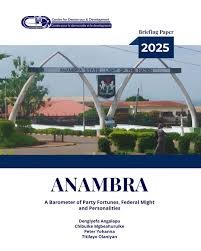
AWKA, Nigeria — The Centre for Democracy and Development (CDD-West Africa) has expressed serious concern over weak political competition, voter apathy, and the fragility of Nigeria’s electoral institutions ahead of the Anambra State Governorship Election slated for Saturday, November 8, 2025.
Speaking during a press briefing in Awka on Friday, CDD-West Africa officially launched its Election Analysis Centre (CDD-EAC) a hub established to monitor, analyze, and fact-check developments before, during, and after the election.
According to the organization, the Anambra poll represents a “litmus test for Nigeria’s democratic integrity” under the new leadership of the Independent National Electoral Commission (INEC), now chaired by Professor Joash Amupitan, who assumed office only a few weeks ago.
“This election is another opportunity for over 2.8 million registered voters in Anambra State to make their voices heard,”
said Dr. Dauda Garuba, Director of CDD-West Africa.
“Although INEC reports a 98.8% Permanent Voter Card collection rate, there are concerns that this may not translate into higher voter turnout.”
The CDD called for professionalism among security agencies, urging them to protect voters without intimidation or bias, to ensure public confidence and safety throughout the process.
Disinformation and Fragile Information Space
CDD’s latest report, “Evaluating Disinformation Risks Ahead of the 2025 Governorship Election in Anambra State,” describes the state’s information environment as “highly volatile and polarised.”
The organisation warned that misinformation and hate speech are emerging as major threats to electoral integrity, identifying seven key disinformation trends, including:
Allegations of partisan bias by security agencies
Exploitation of ethnic and religious divides
Manipulation of political endorsements
Weaponisation of insecurity and “unknown gunmen” narratives
Distortion of campaign statements in Igbo language
Attacks on INEC’s credibility and readiness
Gendered hate speech and harassment of women in politics
To address these risks, CDD said it has launched digital literacy campaigns and is partnering with local content creators to build citizens’ capacity for identifying and debunking falsehoods.
“We are empowering communities to spot and stop disinformation before it spreads,”
said Prof. Victor Adetula, Chair of the CDD Election Analysis Centre.
“Information integrity is essential to credible elections.”
Low Inclusion and Structural Barriers
CDD also decried the low representation of women and persons with disabilities (PWDs) in the governorship race, noting that only two female candidates both from minor parties are contesting.
“Youth enthusiasm is high, but structural barriers remain,”
the group observed.
“No PWD candidate is participating, and polling unit accessibility remains poor.”
Recommendations and Call to Action
The organisation urged all electoral stakeholders to demonstrate commitment to transparency and inclusivity, outlining the following key recommendations:
INEC: Ensure neutrality, timely deployment of materials, and seamless use of BVAS and IReV.
Security Agencies: Guarantee voter safety without intimidation or selective enforcement.
Political Parties: Avoid vote buying and promote peaceful campaigns.
Civil Society & Media: Combat misinformation and promote factual, inclusive reporting.
Citizens: Participate peacefully and reject vote selling.
CDD’s Final Word
CDD-West Africa concluded that the Anambra 2025 governorship election represents more than a sub-national contest it is a critical test of Nigeria’s democratic resilience and institutional credibility.
“This election is not just about who becomes governor,” the statement read.
“It is a test of Nigeria’s ability to uphold transparency, inclusion, and national interest over political expediency.”