
By Chioma Favour
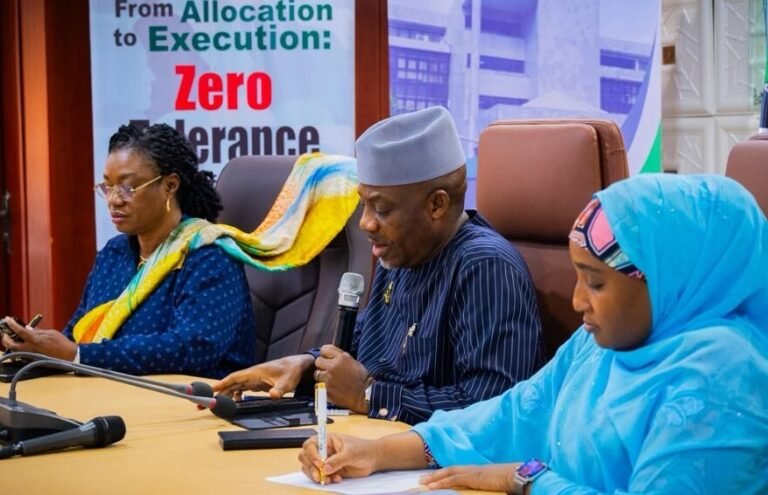
Beijing, China Nigeria’s Minister of Women Affairs and Social Development, Ms. Imaan Suleiman-Ibrahim, has reaffirmed that the advancement of women remains central to achieving peace, prosperity, and sustainable development, emphasizing that the country must bridge an estimated $1.2 billion financing gap over the next five years to realize this vision.
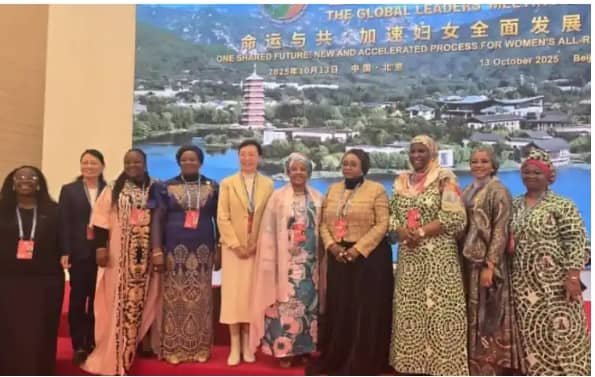
The Minister made this known at the Global Leaders’ Meeting on Women held in Beijing, China, with the theme: “One Shared Future: New and Accelerated Process for Women’s All-Round Development.”
Suleiman-Ibrahim described 2025 as a landmark year, marking 80 years of the United Nations, 30 years of the Beijing Declaration and Platform for Action, 25 years of UN Security Council Resolution 1325 on Women, Peace, and Security, and 30 years of the Global Social Development Agenda.
She highlighted that the establishment of the Federal Ministry of Women Affairs and Social Development remains Nigeria’s cornerstone institutional framework for promoting gender equality, social inclusion, and the protection of women, children, and vulnerable groups.
“Despite our progress, challenges remain. But guided by the Renewed Hope Agenda of President Bola Ahmed Tinubu, Nigeria is advancing transformative reforms that place women, children, and families at the heart of national renewal,” the Minister stated.
The Minister outlined Nigeria’s major gender-focused policy frameworks, including the National Gender Policy (2021–2026), the National Women’s Economic Empowerment (WEE) Policy (2023), the National Policy on Ending Child Marriage, and the Third National Action Plan on Women, Peace and Security (2025–2030).
She said these frameworks aim to expand opportunities, strengthen resilience, protect rights, and deepen investment in women’s empowerment and family well-being.
To ensure measurable impact, the Minister revealed that Nigeria is implementing the Renewed Hope Social Impact Interventions-774 (RH-SII-774) — a coordinated national delivery platform active across all 774 local government areas.
“The programme integrates nine mutually reinforcing pillars that drive women-centered, children-protected, and family-focused transformation. These initiatives are already reshaping local economies, promoting inclusion, and empowering communities,” she added.
Suleiman-Ibrahim also highlighted Nigeria’s efforts to increase women’s political representation through the Special Reserved Seats Bill, which is expected to be passed and adopted by the National Assembly soon.
She further disclosed that the government is mobilizing blended finance, strengthening private sector partnerships, and leveraging impact investment instruments to sustain ongoing reforms.
“Empowering women is not an act of charity, but an investment in productivity, peace, and shared prosperity. We have moved from commitment to measurable action determined to ensure that no woman is unseen, no girl unheard, and no family left behind,” she said.
The Beijing meeting was attended by Heads of State and Government, Parliament leaders, Vice Premiers, Ministers, and diplomatic envoys from nearly 100 countries, alongside representatives of international organizations.