By Chioma Favour
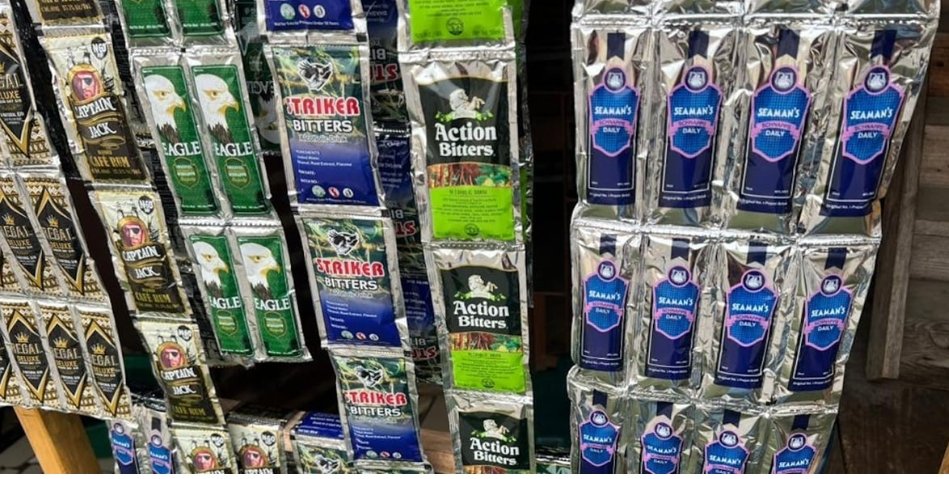
The Federal Government has stepped up enforcement of its nationwide ban on sachet and small-pack alcoholic drinks, warning that the easy availability of these products is contributing to underage drinking and violent crimes across the country.
At a joint press briefing in Abuja, the Director-General of the National Agency for Food and Drug Administration and Control (NAFDAC), Prof. Mojisola Christianah Adeyeye, described alcohol abuse among minors as both a public health emergency and a growing security concern.
According to her, alcohol misuse plays a significant role in violent behaviour, including banditry and kidnapping.
“You cannot be in your right mind and point a gun at somebody; it starts from alcohol and then goes on to hard drugs,” she stated.
Survey Findings Raise Alarm
Adeyeye cited findings from a 2021 nationwide survey conducted in collaboration with the Distillers and Blenders Association of Nigeria.

The study sampled 1,788 respondents across six states representing Nigeria’s six geopolitical zones.
The findings revealed that 54.3 per cent of minors and underaged persons purchase alcohol for themselves. Nearly half 49.9 per cent obtain alcohol directly from retailers selling sachets and small PET bottles.
Other sources included friends and relatives (49.9 per cent), social gatherings (45.9 per cent), and parents’ homes (21.7 per cent).
Among minors who bought alcohol themselves, about 47.2 per cent purchased sachets, while over 40 per cent opted for small PET bottles. Consumption rates were highest in Rivers, Lagos and Kaduna states.

The survey also showed that 63.2 per cent of minors and 54 per cent of underaged children consume alcohol occasionally. Cases of binge drinking were recorded at 2.5 per cent among minors and 11.7 per cent among underaged children, with notable prevalence in Gombe, the Federal Capital Territory and Anambra.
Peer pressure accounted for 50.5 per cent of underage drinking, while parental influence and family environment contributed 34.8 per cent. Social media exposure, alcohol advertising and easy accessibility of liquor outlets were also identified as key drivers.
Health and Social Consequences
The NAFDAC DG referenced global medical evidence indicating that alcohol consumption damages the developing brain, particularly the hippocampus and prefrontal cortex, increasing risks of memory impairment, poor impulse control, depression and long-term addiction.

She added that youths who begin drinking before age 15 are 41 per cent more likely to become alcohol dependent later in life.
Beyond health risks, alcohol abuse has been associated with youth violence, suicide, road crashes, risky sexual behaviour, poor academic performance and declining productivity.
Ban Backed by Senate Resolution
The enforcement follows a Senate resolution of November 6, 2025, directing NAFDAC not to extend the moratorium on sachet alcohol and to ensure strict compliance with the ban on alcohol packaged in sachets and bottles below 200 millilitres.

Effective January 1, 2026, the Federal Government prohibited the production and sale of alcohol in sachets and in PET or glass bottles smaller than 200ml.
Also speaking at the briefing, the Director-General of the National Orientation Agency (NOA) described the move as a deliberate public health intervention to curb underage access to cheap, high-concentration alcohol.
“When affordability meets vulnerability, the consequences are profound,” he said, noting that sachet alcohol is inexpensive, portable and easy to conceal.
The NOA announced a nationwide sensitisation campaign across its 818 offices in all 774 local government areas. The campaign will target markets, motor parks, schools, youth groups, faith-based institutions and rural communities.

Rep. of FCPCC
The agency will also leverage traditional and digital media platforms, including its CLHEEAN App, to enable citizens report violations and support enforcement efforts.
Both NAFDAC and NOA called on parents, teachers, religious leaders and community heads to support the enforcement drive and treat underage alcohol consumption as a serious warning sign.
NAFDAC reaffirmed that limiting access to small, easily concealable pack sizes is critical to reducing youth exposure and preventing long-term social consequences.