
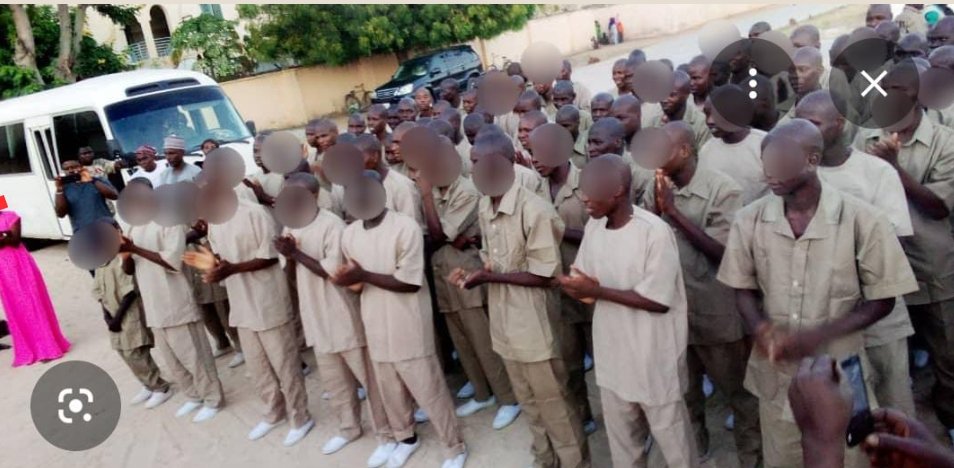
Few national debates provoke as much emotion as the question of rehabilitating so-called “repentant” terrorists.
For communities devastated by insurgency, the idea of offering deradicalisation and reintegration programmes to former fighters can feel like reopening old wounds. Many Nigerians ask: How can the country comfort widows and displaced families while creating pathways back into society for members of groups such as Boko Haram?
The anger is understandable.
For more than a decade, insurgent violence has claimed thousands of lives, displaced millions and destroyed schools, homes and livelihoods particularly in the North-East. Entire communities continue to grapple with trauma and loss.
A Nation Governed by Law
Critics argue that counselling, vocational training and reintegration risk appearing like clemency rather than accountability. Some fear that “repentant” fighters may relapse or act as informants for extremist networks.
These concerns reflect the pain of a wounded nation. Yet security policy, experts argue, cannot be shaped by emotion alone.
At a recent high-level stakeholders’ meeting, the Defence Headquarters reaffirmed its commitment to expanding Operation SAFE CORRIDOR a Disarmament, Rehabilitation and Reintegration (DRR) initiative established in 2016.
According to the military, kinetic operations may weaken insurgent groups, but structured rehabilitation is designed to consolidate those gains by reducing recruitment and encouraging defections.
The Strategy Behind Rehabilitation
Security analysts note that insurgencies rooted in ideology rarely end through force alone. They weaken when recruitment dries up, internal cohesion fractures and surrender becomes more appealing than continued conflict.
Operation SAFE CORRIDOR, officials say, is not an amnesty programme but a controlled framework involving screening, ideological disengagement and psychosocial support. The initiative brings together multiple security agencies, ministries and state governments to coordinate reintegration with host communities.
Authorities argue that every defection undermines insurgent propaganda and disrupts operational networks. Intelligence obtained from defectors has historically aided counterterrorism efforts in various global conflict zones.
Justice, Accountability and Community Trust
Still, many Nigerians insist that rehabilitation must not override justice.
They demand strict screening, transparent monitoring and continued accountability for crimes committed. Victim support through compensation, trauma care and reconstruction—remains central to rebuilding trust.
Observers warn that if former fighters are perceived to receive more attention than victims, public resentment could undermine stabilisation efforts.
The Broader Question
At its core, the debate is not about whether Nigerians are justified in their outrage they are.
The question is whether outrage alone can defeat violent extremism.
Counterinsurgency strategies often blend hard power with soft power: military action to disrupt networks and deradicalisation efforts to erode ideology. Without credible exit pathways, some experts argue, fighters may choose to continue battling rather than surrender.
Nigeria’s challenge lies in balancing justice with long-term security. In conflicts driven by belief systems, the fight extends beyond the battlefield into communities and minds.
The path forward may be uncomfortable, but policymakers maintain that a tightly monitored reintegration framework paired with visible support for victims could help prevent future cycles of violence while upholding the rule of law.
Credit: Nigeria Security Digest. Chidi Omeje