
February 10, 2026, marks 55 years since Nigeria and the People’s Republic of China established diplomatic relations a partnership that has steadily evolved from modest trade links into a Comprehensive Strategic Partnership spanning infrastructure, trade, technology, education, and cultural exchange.
Over the decades, China has emerged as one of Nigeria’s largest trading partners and a key investor in critical sectors of the economy. Both countries say the relationship, founded on mutual respect and non-interference, is now entering a new phase focused on long-term development and institutional cooperation.
President Xi Jinping recently described the evolving ties as a shift “beyond the traditional, trade-heavy dynamic towards a mutually beneficial development model.”
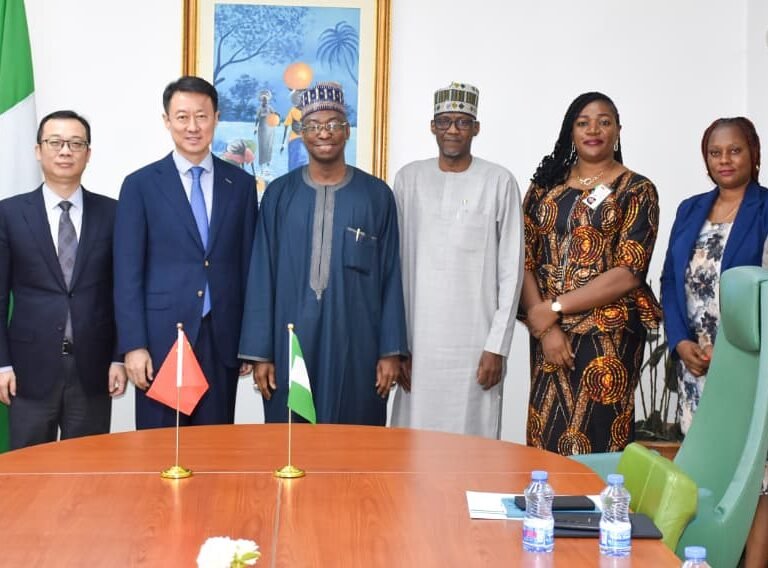
Nigeria’s Ministry of Foreign Affairs reaffirmed this position during a recent meeting between the Ministry’s Spokesperson, Kimiebi Ebienfa, and the Chargé d’Affaires of the Chinese Embassy, Zhou Hongyou, in Abuja. Ebienfa noted that the relationship has had direct impact on Nigeria’s economy through job creation, capacity building, and technology transfer.
Both sides emphasized the need to deepen diplomatic engagement through reciprocal visits, study tours, and training programmes for diplomats and public officials, including short-term courses coordinated by Chinese institutions such as Peking University. Zhou said China “is prepared to be a partner of Nigeria to stand up to challenges.”
Infrastructure as the Cornerstone
Infrastructure development remains the most visible symbol of China-Nigeria cooperation under the Belt and Road Initiative (BRI). Chinese-backed projects include the Abuja Kaduna, Lagos–Ibadan, and ongoing Ibadan Kano rail lines, as well as upgrades to international airports and the Lekki Deep Seaport.
The Lekki port, widely regarded as a flagship BRI project in West Africa, has expanded Nigeria’s maritime capacity and strengthened its position as a regional logistics hub.
China’s footprint also extends to roads, bridges, power projects such as the Mambilla Hydroelectric Power Plant, solar energy initiatives, and telecommunications expansion led by firms like Huawei and ZTE.
Trade, Investment and Industrial Growth
Bilateral trade between both countries reached $21.89 billion in 2024, with Nigeria exporting crude oil, liquefied natural gas, and other commodities, while importing machinery, electronics, textiles, and industrial equipment from China.
Nigeria is currently China’s largest engineering contract recipient in Africa and its second-largest export market on the continent.
The $2.4 billion currency swap agreement signed in 2018 has further eased trade transactions, while Chinese-supported industrial parks, free trade zones, and manufacturing hubs in textiles, cement, steel, and agriculture continue to attract investment.
Education, Health and Cultural Exchanges
China has strengthened educational and cultural ties through Confucius Institutes in Nigerian universities, scholarships for Nigerian students, and professional training programmes. In healthcare, Chinese medical missions and the China-Nigeria Friendship Hospital in Abuja have supported service delivery and training for local professionals.
Nigeria has consistently upheld the One-China Principle as the basis of diplomatic relations between both nations.
Elevation to Comprehensive Strategic Partnership
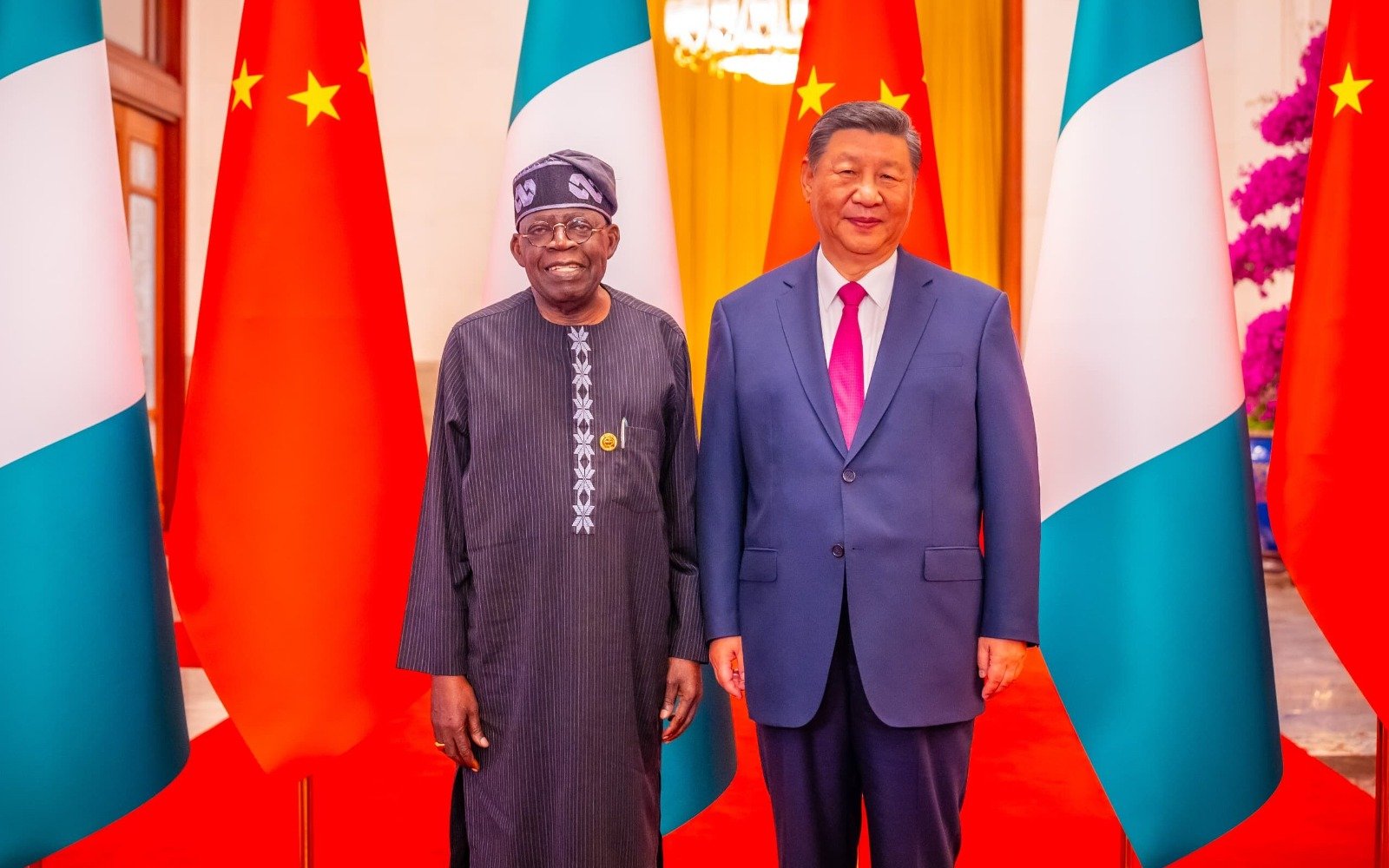
In September 2024, Presidents Bola Tinubu and Xi Jinping elevated the relationship to a Comprehensive Strategic Partnership during the Beijing Summit of the Forum on China-Africa Cooperation (FOCAC). The new framework prioritizes cooperation in infrastructure, clean energy, technology, education, governance, and media exchange.
Chinese Ambassador to Nigeria, Yu Dunhai, said the partnership is expected to “drive economic growth, improve infrastructure, and enhance Nigeria’s global standing.”
High-Level Visits Shaping Relations
Since diplomatic ties were established in 1971, a series of high-level visits by leaders of both countries have shaped the trajectory of the relationship.
From General Yakubu Gowon’s pioneering visit in 1974 to recent engagements by President Tinubu, Vice President Kashim Shettima, and Chinese Foreign Minister Wang Yi in January 2025, these exchanges have consistently produced agreements on trade, infrastructure financing, energy, defense cooperation, and human resource development.
Role of the Nigeria-China Strategic Partnership (NCSP)
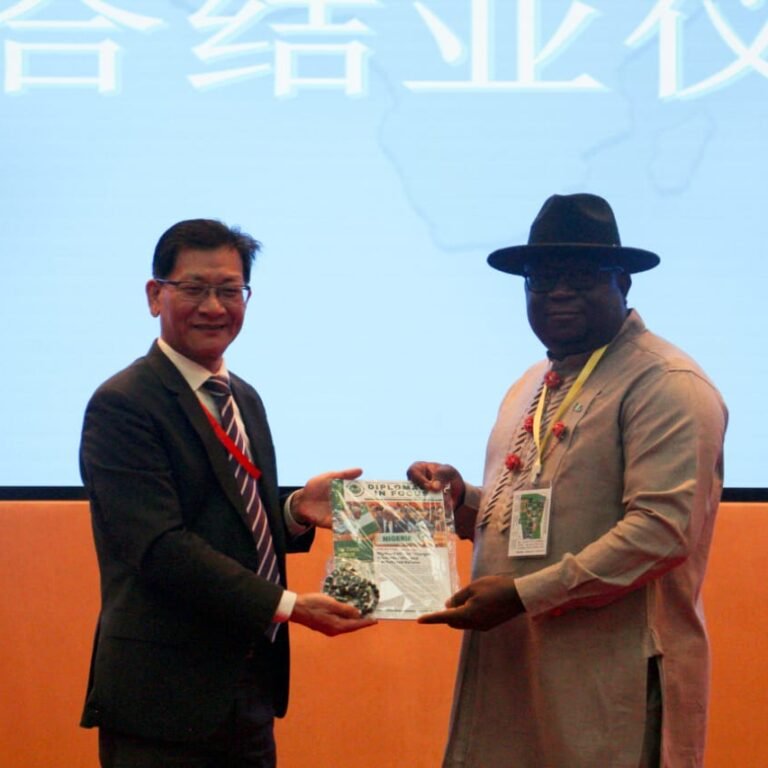
The Nigeria-China Strategic Partnership, led by Director-General Joseph Tegbe, has become a key institutional platform for coordinating bilateral initiatives. The NCSP has hosted delegations from the Central Party School of the Communist Party of China and facilitated engagements focused on governance reform, investment, healthcare, and environmental sustainability.
Tegbe noted that the goal is to build “a forward-looking development partnership founded on mutual respect, strategic coordination, and shared prosperity.”
Looking Ahead
As both nations commemorate 55 years of diplomatic relations, officials say the focus is now on deepening cooperation in agriculture, renewable energy, healthcare, industrialization, and regional integration.
With China seeking reliable partners in Africa and Nigeria pursuing infrastructure modernization and economic diversification, the partnership appears set to expand further in scope and depth.
For both countries, the anniversary is not just a celebration of history, but a signal of a future shaped by shared developmental goals and sustained strategic engagement.