
By Gabriel Ameh
📍 Abuja | Media360Impact.
In Nigeria’s democracy, elections determine who governs. But the institution that manages that process the Independent National Electoral Commission (INEC) is often misunderstood.
What exactly does INEC do?
Does it prosecute electoral offenders?
Who conducts local government elections?
And what changed with the 2026 amendment on electronic transmission of results?
Media360impact provides a clear and comprehensive breakdown.
What Is INEC?
INEC is Nigeria’s constitutionally established electoral management body, created in 1998 and empowered by:
The 1999 Constitution (as amended)
The Electoral Act (as amended, including 2026 revision)
INEC is responsible for organizing, undertaking, and supervising elections into:
*.The Office of the President
*The National Assembly
*.Governorship positions
*.State Houses of Assembly
Who Leads INEC?
INEC is headed by a Chairman who also serves as Chief Electoral Commissioner.
The current Chairman is Joash Ojo Amupitan, SAN, who assumed office in October 2025 following Senate confirmation.
The Commission also consists of:
*.12 National Commissioners
*.36 Resident Electoral Commissioners (RECs)
*.A Secretary to the Commission
Offices in all states and local government areas nationwide
What Does INEC Actually Do?
1️⃣ Conducting Federal and State Elections
*. INEC conducts:
*. Presidential elections
*. National Assembly elections
*. Governorship elections
*. State Assembly elections
*. By-elections where vacancies occur
2️⃣ Conducting FCT Area Council Elections
INEC also conducts elections for the six Area Councils in the Federal Capital Territory (FCT).
This is a special constitutional arrangement. Unlike the 36 states, the FCT does not have a State Independent Electoral Commission.
Therefore, INEC oversees elections for:
*. Area Council Chairmen
*. Area Council Councillors
This is the only form of local government type election conducted by INEC.
Who Conducts Local Government Elections in the 36 States?
INEC does not conduct local government or chairmanship elections across Nigeria’s 36 states.
Under the 1999 Constitution, each state has its own State Independent Electoral Commission (SIEC) responsible for organizing:
Local Government Chairmanship elections
Councillorship elections
This distinction is constitutionally grounded. Unless the Constitution is amended, INEC’s authority does not extend to state-level local government elections.
This separation is often debated, especially regarding the credibility and uniformity of local government polls nationwide.
Voter Registration and PVCs
INEC maintains the National Register of Voters and conducts Continuous Voter Registration (CVR).
Eligible Nigerians aged 18 and above are issued Permanent Voter Cards (PVCs), which are required for voting.
Technology and Electoral Reforms
In recent years, INEC introduced:
*. BVAS (Bimodal Voter Accreditation System) for biometric accreditation
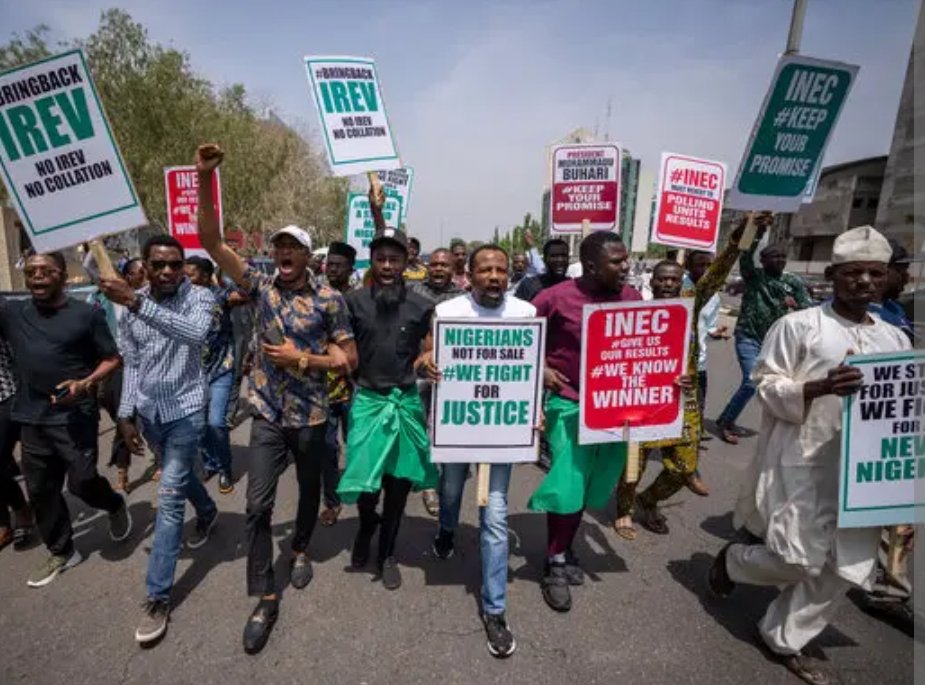
*. IReV (INEC Result Viewing Portal) for uploading polling unit results
These reforms were aimed at improving transparency and credibility in elections.
The 2026 Electoral Act Amendment and Electronic Transmission of Results
In February 2026, President Bola Ahmed Tinubu signed the Electoral Act (Amendment) 2026 into law.The amendment clarified the legal framework for electronic transmission of election results.
What the law now provides:
*. Polling unit results may be transmitted electronically to INEC’s central portal.
*. Signed and stamped result sheets (Form EC8A) remain legally fundamental.
Electronic transmission supports the process but does not completely replace manual collation.
Where network infrastructure fails, manual collation remains valid.
This creates a hybrid results management system combining electronic transmission with manual verification safeguards.
The amendment represents a significant shift in Nigeria’s electoral framework ahead of future elections.
Can INEC Prosecute Electoral Offenders?
This area is frequently misunderstood.
INEC does not function as a traditional law enforcement body like the police or EFCC.
While the Electoral Act permits INEC to initiate legal action in cases of electoral offences, investigations and enforcement typically involve security agencies, and prosecutions proceed through the courts.
Because of these limitations, there have been sustained calls for the establishment of an independent Electoral Offences Commission dedicated solely to investigating and prosecuting electoral crimes.
How Nigerian Elections Work (Simplified)
1. Political parties conduct primaries.
2. Candidate names are submitted to INEC.
3. INEC publishes final lists.
4. Campaign period begins.
5. Election Day:
* Accreditation using BVAS
* Voting
* Counting at polling units
* Completion and signing of result forms
* Electronic upload where possible
6. Results are collated and declared.
Election disputes are handled by tribunals and courts not by INEC.
Challenges Facing INEC
#. INEC operates under significant Operational pressures, including:
*.Logistics across vast and difficult terrain
* Security threats during elections
* Infrastructure gaps affecting electronic transmission
* Allegations of irregularities
* Public trust concerns
Administering elections in Africa’s most populous country remains a complex undertaking.
Why INEC Matters
* INEC’s performance directly affect:
* Legitimacy of elected leaders
* Political stability
* Public confidence in democratic institutions
* Nigeria’s international democratic standing
* Free and credible elections are foundational to governance and accountability.
The Road Ahead
With the 2026 amendment now in force and debates ongoing around prosecutorial reform and electoral transparency, attention is shifting to:
Full implementation of hybrid result transmission
Strengthening enforcement against electoral offences
Enhancing public trust
INEC’s institutional credibility will remain central to Nigeria’s democratic future.
INEC is one of Nigeria’s most consequential public institutions. Its mandate is broad, but not unlimited. It conducts federal and state elections, regulates political parties, manages voter registration, and oversees FCT Area Council elections but does not conduct local government elections in the 36 states.
Understanding its powers, limitations, and evolving legal framework is essential for informed civic participation.