
0-0x0-0-0-{}-0-0#
By Gabriel Ameh
Abuja, Nigeria – February 21, 2026
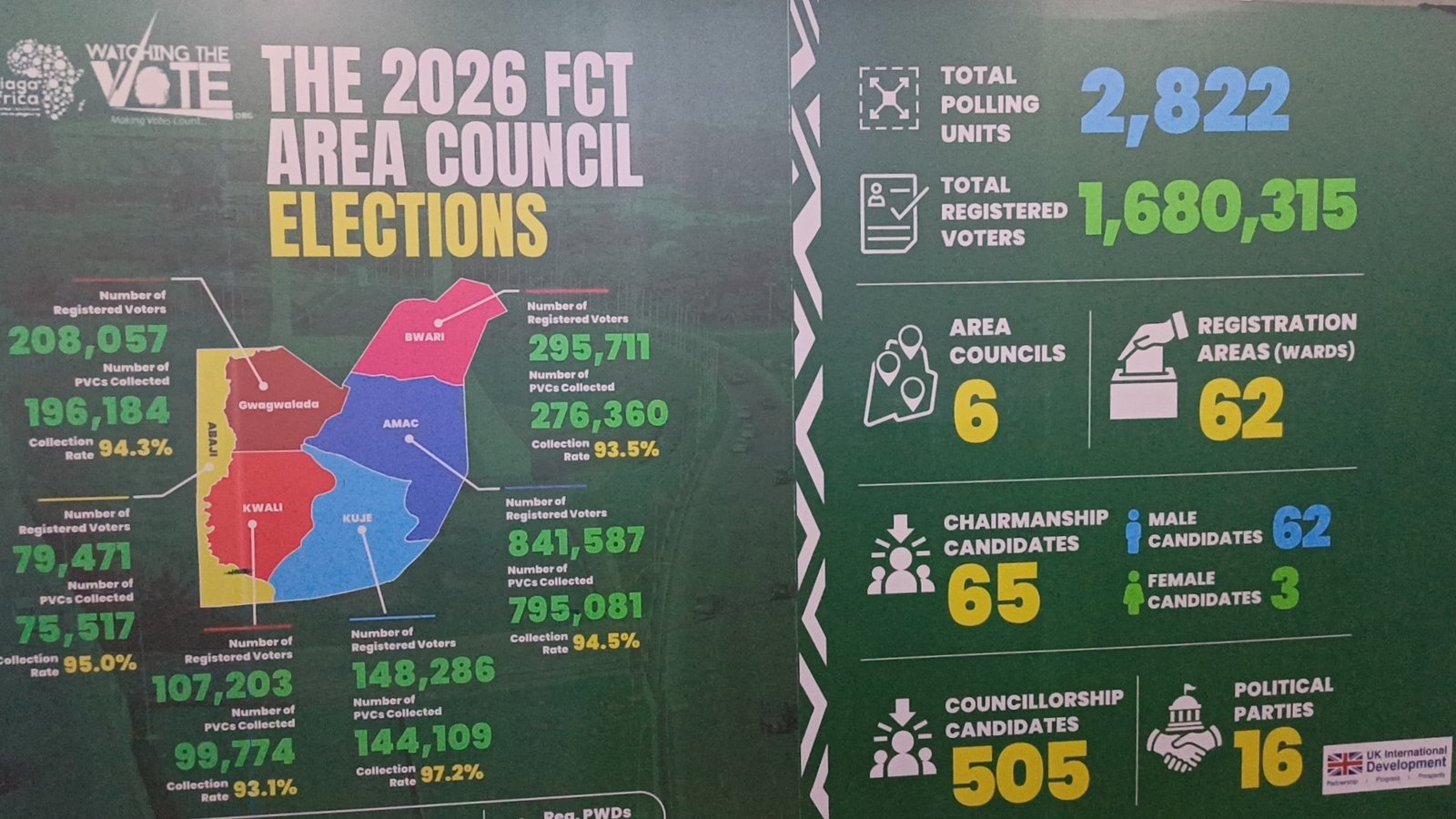
Yiaga Africa has released its preliminary assessment of the 2026 Federal Capital Territory (FCT) Area Council elections conducted on Saturday, February 21, 2026.
The elections, organized by the Independent National Electoral Commission (INEC), were held to fill Chairmanship positions across the six Area Councils of the FCT and 62 Councillorship seats.
Deployment and Methodology
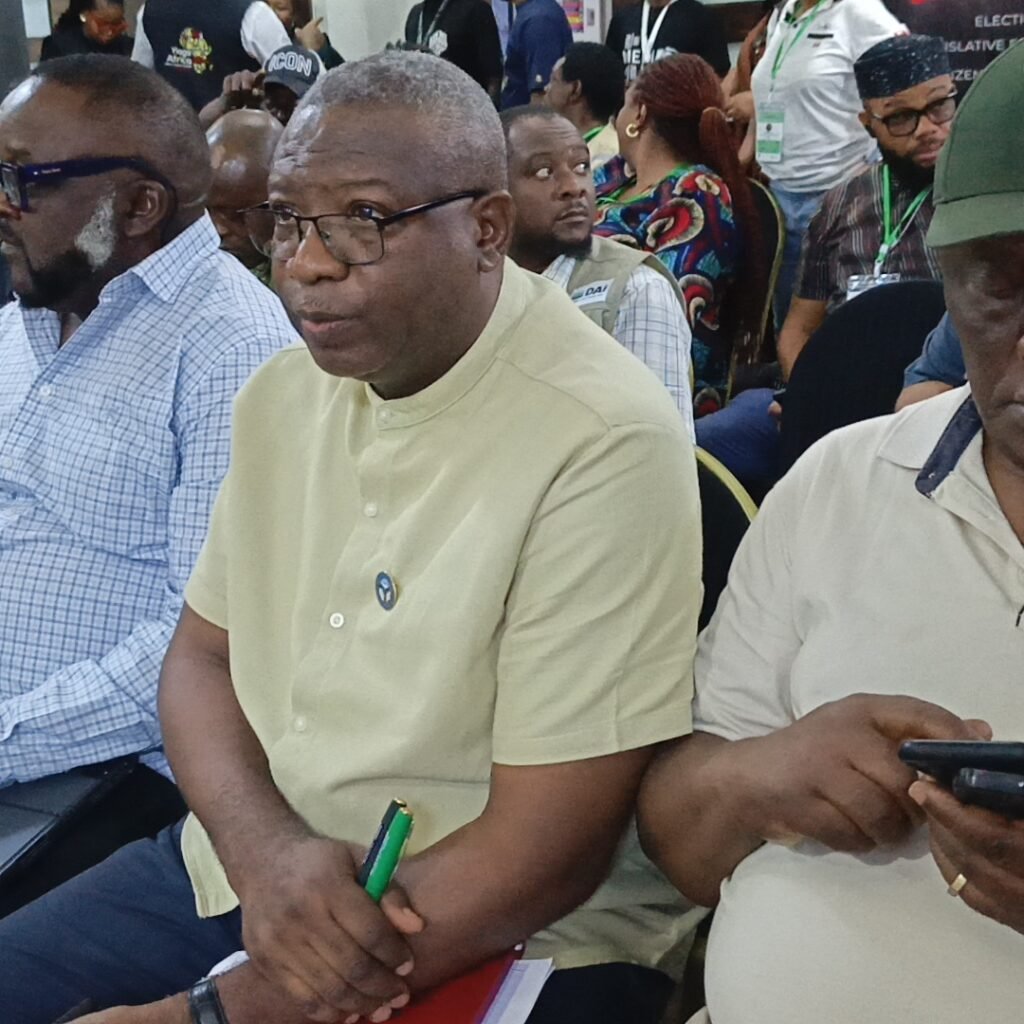
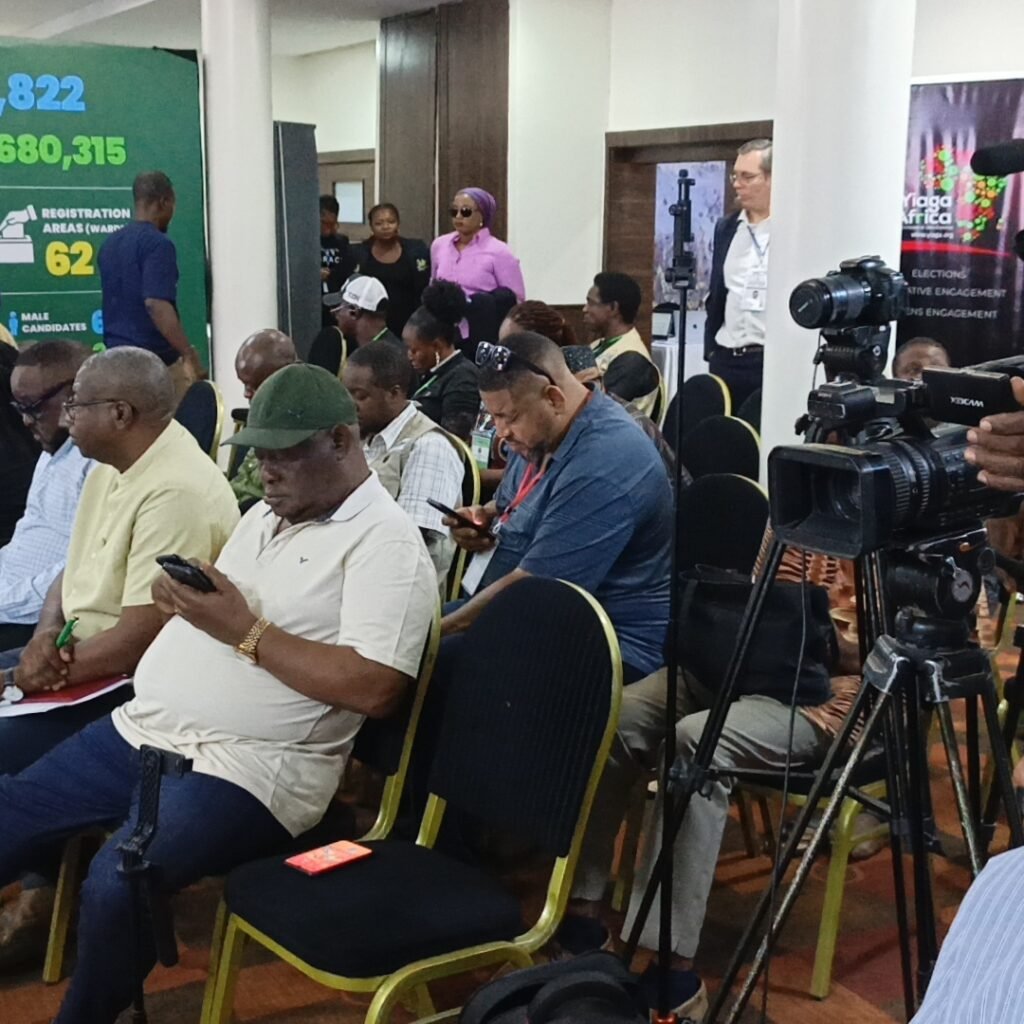
Yiaga Africa deployed trained and duly accredited roving observers across the 62 wards in the FCT. Observers were on ground from 7:30 a.m., monitoring critical aspects of the process, including the opening of polls, accreditation, voting, counting, and posting of results.
Following voting and declaration of polling unit results, Yiaga Africa’s collation observers were scheduled to deploy to Ward and Area Council Collation Centres to observe the collation process and transmit real-time reports.

The statement was issued under Yiaga Africa’s Watching The Vote (WTV) initiative. However, the organisation clarified that it did not deploy its Parallel Vote Tabulation (PVT) methodology for this election. As such, the report focuses strictly on process observation and does not provide independent statistical verification of the final results.
A detailed report on the collation process will be released at the conclusion of collation.
General Assessment
Yiaga Africa noted that the elections were conducted in a largely peaceful atmosphere, with voters who presented themselves at polling units generally able to cast their ballots without widespread disruption.
However, voter turnout was observed to be low across most polling units monitored.
The organisation also reported logistical challenges that affected the timely commencement of voting, particularly in the Abuja Municipal Area Council (AMAC). Delays in the deployment of personnel and materials contributed to late openings in several locations.
Additionally, the relocation of certain polling units without adequate and timely communication to voters created confusion and may have led to voter disenfranchisement.
Key Preliminary Findings (as of 1:00 p.m.)
- Late Opening of Polling Units
Observers reported delayed commencement of voting in several polling units, largely due to logistical inefficiencies and, in some instances, security-related challenges.
As of 9:00 a.m., set-up activities were still ongoing in the majority of polling units observed. In AMAC, particularly in Wuse and Gwarinpa wards, accreditation and voting in several polling units did not begin until after 10:00 a.m.
On average, accreditation and voting across sampled polling units commenced around 10:00 a.m., later than the time prescribed by electoral guidelines. - Deployment of Election Materials
Critical materials such as the BVAS machines and voter registers were deployed in the polling units observed.
However, in Polling Unit 004, Wuse Ward, Zone 2 Primary School, the voter register was initially absent until concerns were raised by observers and voters.
Voting cubicles were reportedly not sighted in PU002 Ward 09, PU006 Ward 01, and PU012 Ward 10 in Abaji Area Council. In one polling unit, an ink pad was also not available at the time of observation. - Redistribution of Voters Without Adequate Notice
Yiaga Africa observed instances where voters were reassigned to newly created polling units without sufficient prior notice.
Although INEC reportedly sent SMS notifications to affected voters, many of these messages were delivered on Election Day in some cases hours after polling had commenced.
This led to confusion at several polling locations, with some voters spending over an hour attempting to identify their correct polling units. In certain cases, congestion and overcrowding were recorded.
Observers also noted disparities in voter distribution within the same polling locations, raising concerns about the coherence and technical soundness of the polling unit expansion and voter redistribution process.
Yiaga Africa stated that such inconsistencies have implications for voter access, queue management, and public confidence in electoral planning. - Early Closure of Polling Units
Observers reported that some polling units closed before the official 2:30 p.m. closing time.
While turnout was low in some areas, electoral guidelines require polling units to remain open until 2:30 p.m. or until the last voter on the queue has voted.
Preliminary Recommendations
To INEC
In light of delayed commencement in some polling units, INEC should consider extending voting time particularly in areas with high turnout to prevent disenfranchisement.
Officials should ensure that Form EC60E (People’s Result Sheet) is posted at polling units and that Form EC8A is uploaded to the IReV portal using BVAS, in line with transparency commitments.
Results collation and declaration should strictly adhere to established legal and procedural guidelines to safeguard credibility.
INEC should conduct a comprehensive public engagement campaign on voter redeployment to newly created polling units, including timely voter education and improved verification tools.
To Security Agencies
Security personnel are urged to maintain professionalism and impartiality, particularly at collation centres. Their role should remain limited to safeguarding voters, election officials, and materials, without interfering in the electoral process.
To Political Parties
Political parties, candidates, and their supporters are advised to refrain from actions that could disrupt or undermine the electoral process.
Yiaga Africa reaffirmed its commitment to providing accurate and credible information throughout the electoral process.
The organisation stated that its observers will continue to monitor collation centres and track updates on INEC’s results portal to assess transparency and efficiency.
Yiaga Africa called on voters to remain patient despite challenges and urged all stakeholders including citizens, political parties, INEC, and security agencies to contribute to a peaceful, credible, and conclusive process.
The Watching The Vote project, the organisation noted, remains “Driven by Data, For All Nigerians, Beholden to None.”