
By Gabriel Ameh
The Nigerian Army has reaffirmed its commitment to strengthening defence cooperation with Pakistan as part of broader efforts to enhance operational capacity and respond to emerging security challenges.
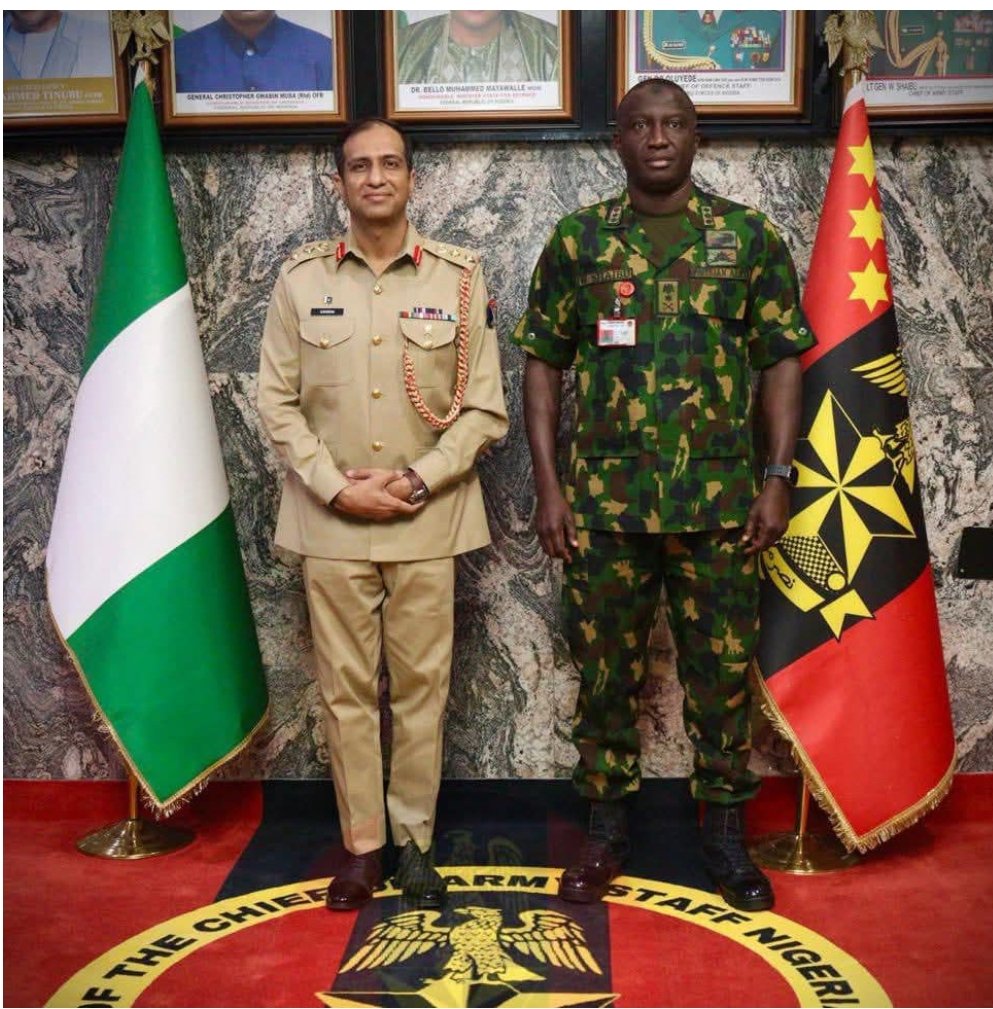
The Chief of Army Staff (COAS), Lt.-Gen. Waidi Shaibu, stated this while receiving Pakistan’s Defence Adviser to Nigeria, Col. Kamran Mushtaq, at the Army Headquarters in Abuja.
In a statement issued by the Acting Director of Army Public Relations, Col. Appolonia Aanele, the Army Chief described the longstanding military relationship between Nigeria and Pakistan as strategic, noting that expanded collaboration in joint training, intelligence sharing, defence technology and operational planning would reinforce collective security.
According to Lt.-Gen. Shaibu, deepening cooperation in these areas would improve interoperability between both armies and strengthen their capacity to tackle complex and evolving threats, including terrorism and insurgency.
He commended the enduring partnership between the two militaries, highlighting shared operational experiences in counter-terrorism and counter-insurgency operations. The COAS also emphasised the importance of sustained capacity-building through professional military education.
He noted that several Nigerian officers have undertaken advanced military courses in Pakistan, while arrangements are in place for Pakistani officers to participate in programmes at Nigeria’s National Defence College.
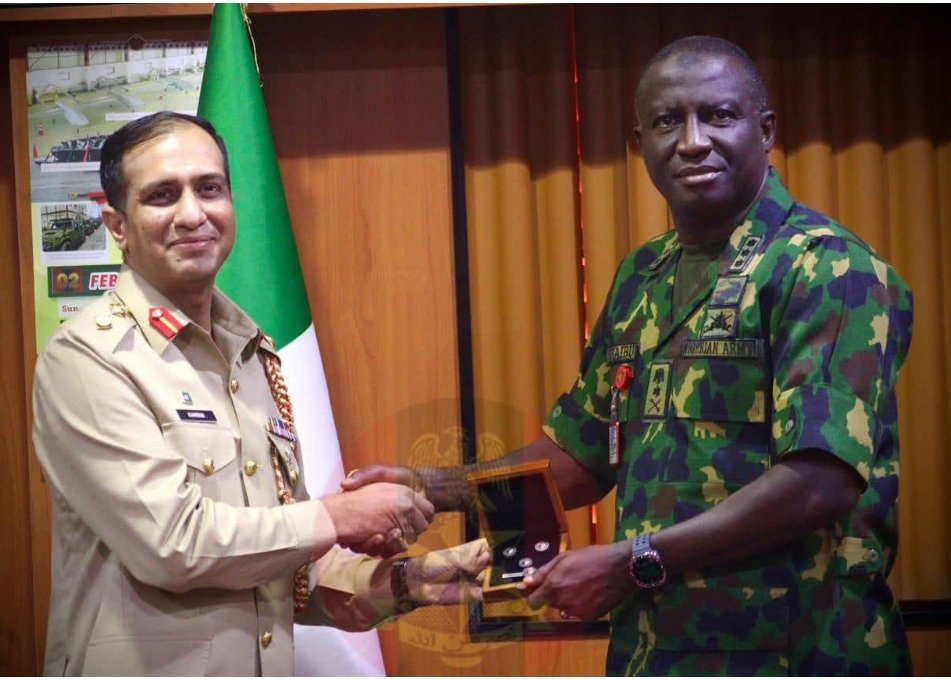
The Army Chief further stressed that closer intelligence collaboration and strategic defence procurement would enhance Nigeria’s operational readiness, technological capabilities and overall combat effectiveness.
In his remarks, Col. Mushtaq conveyed the goodwill of Pakistan’s Chief of Defence Forces, Field Marshal Asim Munir, and commended the Nigerian Army for its professionalism and resilience.
Drawing from Pakistan’s more than two decades of counter-terrorism experience, he reaffirmed his country’s readiness to expand cooperation with Nigeria through specialised training, technical support and the provision of critical enablers, including advanced surveillance and communication systems.
Both officials reiterated their commitment to strengthening joint professional military education and exchange programmes, describing them as essential to improving operational synergy and addressing regional and transnational security threats.