

By Gabriel Ameh
Abuja, February 19, 2026 – The Federal Government has advanced plans to establish the Armed Forces College of Medicine and Health Sciences (AFCOM&HS), a new institution designed to strengthen military medical readiness and address Nigeria’s widening healthcare workforce gap.
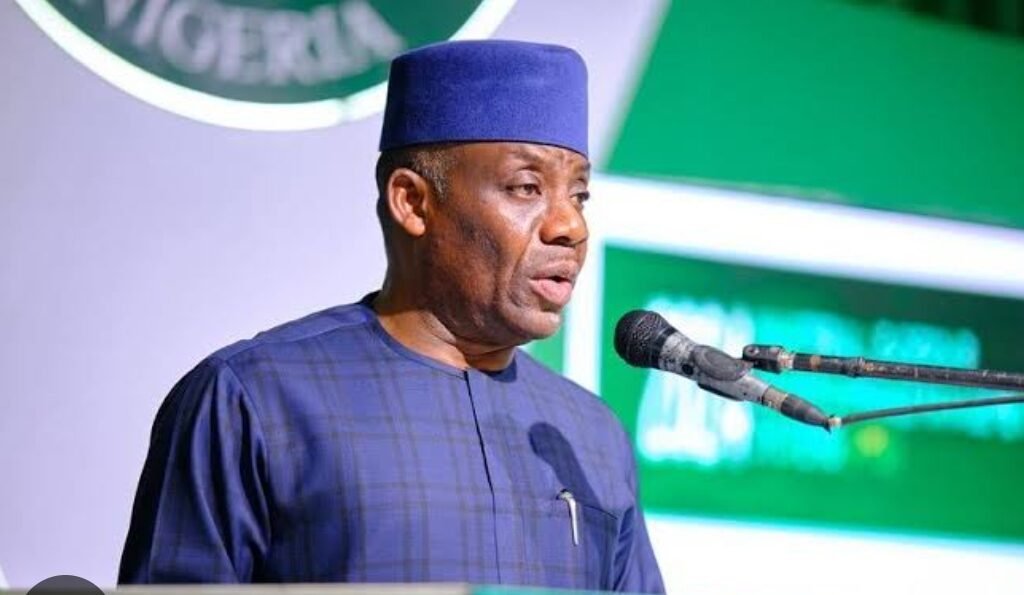
The decision followed a high-level meeting led by the Minister of Education, Dr. Maruf Tunji Alausa, and the Minister of State for Education, Prof. Suiwaba Sai’d Ahmed, alongside the Minister of Defence, Mohammed Badaru Abubakar, the Minister of State for Defence, Dr. Bello Mohammed Matawalle, and senior officials from the education, defence and health sectors.
Officials said the proposed college would serve as a strategic intervention to build a sustainable pipeline of combat casualty-trained doctors, trauma specialists, emergency response medics, military public health experts, and other allied health professionals dedicated to serving within the Armed Forces.

Speaking at the meeting, the Education Minister noted that although Nigeria’s population has surpassed 240 million, only 189 medical professionals are currently serving within the Defence Forces. He also highlighted a national shortfall of about 340,000 doctors, describing the situation as urgent and requiring innovative, scalable solutions.
As part of broader reforms, the Federal Ministry of Education has increased annual medical school admissions from about 5,000 to nearly 10,000, with projections to raise the figure to approximately 19,000 in the coming years. The proposed Armed Forces College is expected to form a key part of that expansion strategy.
In compliance with the Federal Government’s seven-year moratorium on new tertiary institutions and a directive by President Bola Ahmed Tinubu, the College will be established within the existing framework of the Nigerian Defence Academy. It will operate in partnership with accredited federal and military hospitals to ensure robust clinical training and regulatory compliance.
Admissions into the College will be conducted through the Joint Admissions and Matriculation Board. Upon completion of their training, medical cadets will be commissioned as Captains in the Armed Forces, combining professional medical expertise with military leadership and operational readiness.
Officials said the structure is designed to enhance retention, reduce attrition and ensure a steady supply of commissioned medical officers.
To ensure regulatory compliance and quality assurance, a Technical Working Group has been constituted. It includes representatives from the Medical and Dental Council of Nigeria, the Pharmacists Council of Nigeria, the Nursing and Midwifery Council of Nigeria, the National Universities Commission, the Joint Admissions and Matriculation Board, the Committee of Provosts of Medical Schools, and the Armed Forces.
The government aims to complete all necessary regulatory processes in time for admissions to commence by October or November 2026.
The Federal Ministry of Education described the initiative as a long-term investment in Nigeria’s health security, defence personnel welfare and medical workforce development, with potential to position the country as a regional hub for military medical training in West Africa.