
By Gabriel Ameh
President Bola Ahmed Tinubu has said ethical leadership and strong institutions remain the most reliable path to peace, justice, and sustainable development in today’s divided world.
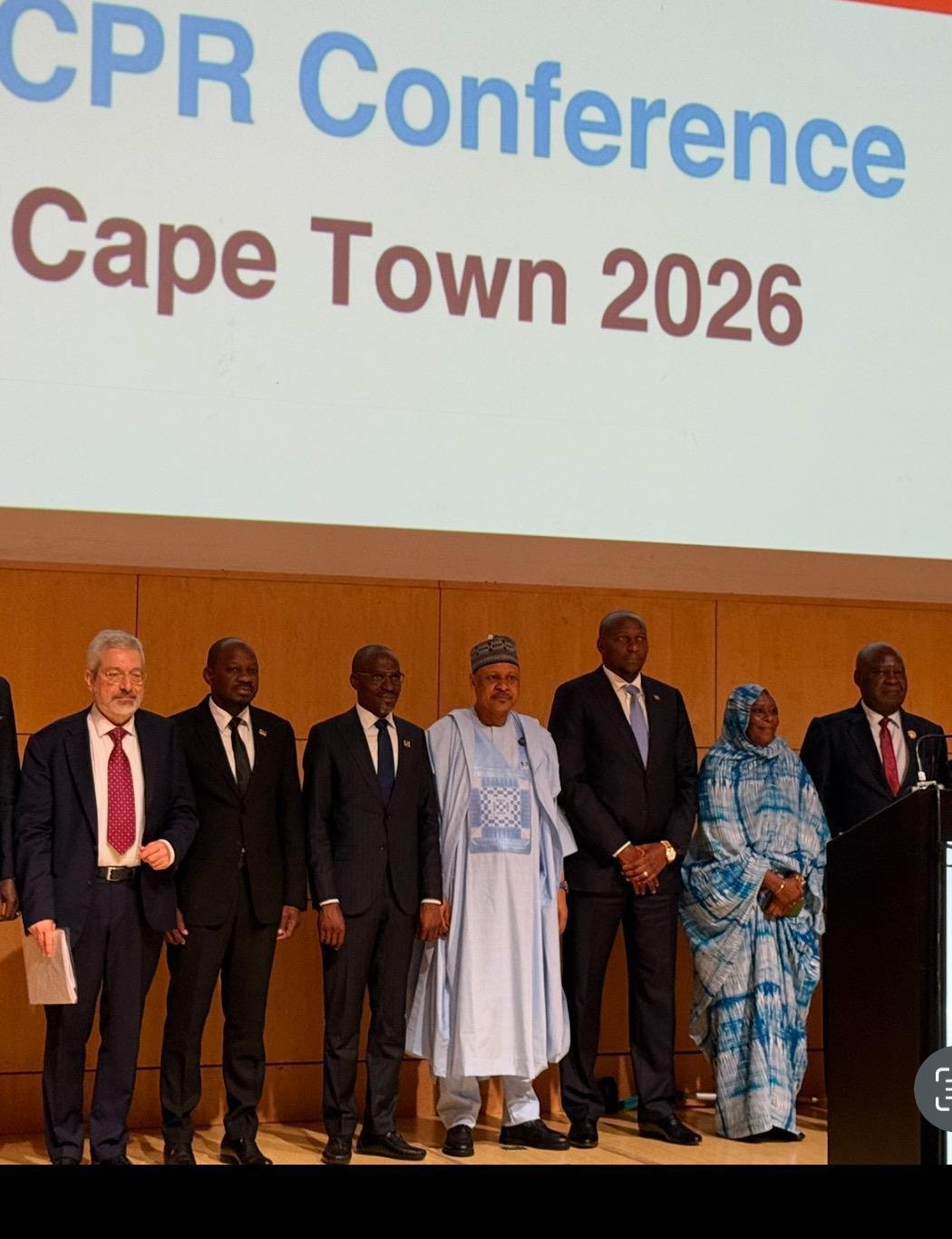
The President made the remarks on Friday at the Global Council for Political Renewal conference in Cape Town, South Africa. He was represented by the Minister of Information and National Orientation, Mohammed Idris.
Addressing participants, Tinubu noted that rising political and ideological polarisation, amplified by the rapid spread of misinformation, poses a growing threat to public trust and democratic discourse.
“We are living in a time where misinformation spreads faster than truth. The challenge before us is protecting free expression while restoring responsibility, civility, and trust in public conversation,” he said.
The President said his administration’s reform agenda is focused on strengthening transparency, accountability, and institutional performance under the Renewed Hope programme.
“Public office is a trust. Our reforms are aimed at modernising institutions, reducing leakages, and ensuring that governance decisions positively impact citizens’ daily lives,” he stated.
Tinubu highlighted ongoing social and economic interventions, youth-focused initiatives, and efforts to guide the responsible use of technology and digital platforms. He stressed that political renewal is a continuous process that requires building resilient institutions and protecting democratic space.
He also reaffirmed Nigeria’s support for the ideals of the Global Council for Political Renewal, which promotes dialogue, justice, and peace among nations. According to him, sustained international cooperation is essential in the face of global economic and security challenges.
“No country is immune to these pressures. Dialogue and partnership remain critical for global stability,” he added.
Among dignitaries at the event were Russell Mmiso Dlamini, Prime Minister of Eswatini and President of the Council; Furio Honsell, Secretary General of the Council; José Ramos-Horta; and Simplice Mathew Sarandji, President of the National Assembly of the Central African Republic, among others.